Modeling classroom cognition and teaching behaviors with COVE
David Gibson
CurveShift, Inc.
100 Notchbrook Road
Stowe, Vermont 05672
(802) 253-9588
Abstract..................................................................................................................................................................................... 2
Introduction............................................................................................................................................................................ 2
The cognitive science framework for learning............................................................................................ 3
Theories of Teaching....................................................................................................................................................... 4
Modeling a learner with COVE..................................................................................................................................... 5
C - Cognitive Characteristics..................................................................................................................................... 7
O - Psychological & Emotional
Characteristics........................................................................................ 10
V- Physiological Characteristics......................................................................................................................... 14
E - Environment.................................................................................................................................................................. 15
The Brisbane Model........................................................................................................................................................ 16
The OCC Model.................................................................................................................................................................... 16
The BDI Model...................................................................................................................................................................... 17
The DETT Model.................................................................................................................................................................. 18
Nature of Knowledge....................................................................................................................................................... 21
Knowledge
Acquisition............................................................................................................................................... 21
Understanding and Labels....................................................................................................................................... 23
Hierarchy, Temporality and Agency.................................................................................................................. 24
Ultimate Knowledge: How to Learn................................................................................................................... 30
Applying the Knowledge Framework................................................................................................................. 31
Community = Environment............................................................................................................................................. 32
Feedback and Assessment............................................................................................................................................. 37
Data-mining and automated learning............................................................................................................ 37
Data relevance................................................................................................................................................................ 38
Attribution......................................................................................................................................................................... 39
Implications for
policy, research and practice......................................................................................... 40
Conclusion.............................................................................................................................................................................. 41
In order for a digital simulation to provide an artificial
teaching environment there needs to be a computational model of the act of
teaching interacting with software agents. The COVE model integrates Cognitive science models, the OCEAN model of psychology and OCC model of emotions, Visual-Auditory-Kinesthetic perception
and the Environment (social and
physical expectations) for learning. A context for the COVE agent model is
provided by the How People Learn theory
of learning and Behaviorist-Cognitivist-Constructivist instructional framework This
chapter presents design considerations for computationally modeling COVE to
enable agents to possess the psychological, physical, cognitive, and social
aspects of learning that enable the representation of behaviors of students in
learning environments and to allow simulation of HPL-BCC theories of
instruction and learning. The chapter will briefly describe cognitive and
behavioral agent models and examine how researchers are representing
educational theories with computational models.
A groundswell of research and interest indicates a wide
range of benefits of educative games and simulations: why we should build
educative games, and what options and frameworks are available for building
them with a technical and artistic balance of pedagogy, simulation and game
elements. Among the benefits are practice-based development of procedural
knowledge, motivational self-directed experiences, inquiry-based
trial-and-error learning with immediate feedback on progress, and tangible
results (Prensky 2002; Beck and
Wade 2004; Gee 2004; Squire 2005).
Social theorists add that learning in simulated environments engages
participants in new forms of identity, social negotiation, and virtual
economies while promoting and practicing skills needed for a knowledge-based,
globally-networked society (Galarneau and Zibit
2006; Jones and Bronack 2006). Technical and theoretical entrepreneurs
furthermore envision a radical transformation of e-learning from text-based to
epistemic experience-based learning with vastly increased value to participants
due to automated analysis, personalized feedback, and adaptive artificial
intelligence (Aldrich 2005; Becker
2006; Gibson 2006; Stevens 2006; Van Eck 2006; Shaffer 2007).
These developments suggest ways that teachers can benefit and education can be
improved through games and simulations, including artificial teaching
environments.
Efforts to research, design and implement computer-based
games and simulations to improve teaching have begun to surface. Classroom
Sims, marketed by Aha! Process, Inc. are based on work by Dr. Ruby Payne. Cook
School District, by Drs. Gerry and Mark Girod of Western Oregon University, is
based in the “Teacher Work Sample Methodology.” SimClass, in two versions
developed by graduate students of Dr. Youngkyun Baek of the Korea National
University of Education, is based in the ARC model of motivation, Multiple
Intelligences and other theories. SimSchool, developed by me, Bill Halverson
and Melanie Zibit is based in the COVE model, which integrates ideas from
learning theory, cognitive science, computational neuroscience, complex systems
and artificial intelligence. This chapter will compare these and other examples
of modeling approaches.
The plan of the chapter begins by outlining the cognitive
science framework of learning and presenting a triad of broad instructional
philosophies. Following that, the COVE model is outlined, and several
alternative agent modeling approaches are briefly described and compared with
implications for contributing to the field of simulations for improving
teaching. In the second half of the chapter, design considerations are presented
for simulating alternative instructional philosophies and methodologies. The
chapter concludes by bringing the models of learning and teaching into a
broader framework of learning provided by recent cognitive science literature.
Four broad arenas of learning theory have emerged in cognitive science and the research on teaching and learning, outlined in a
National Research Council report on “How People Learn” (HPL) framework (Bransford, Brown and
Cocking 2000).
The HPL framework elements are:
- The
characteristics of the learner
- The
nature of knowledge
- The
role of a community in
shaping expertise
- The
role of feedback in shaping performance
It is important to point out that the HPL framework
(Figure 1) is not a model of “transmission of knowledge to students.” Rather,
it is a whole-systems perspective on how people learn, a subset of which takes
place in traditional classrooms. We should not expect HPL theory to inform the
computational model of teaching, but it has much to offer models of the act and
context of learning. The section on modeling the learner will examine ideas in
each of the four HPL theory arenas. Next, three broad theories of teaching are
briefly introduced.
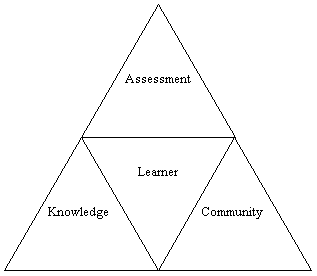
Figure 1. The HPL (How
People Learn) framework represented as a fully connected geometry. Folding the
structure reveals that each facet is connected to all remaining facets.
In addition to modeling the learner, aspects of the art and
science of teaching also need to be framed and computationally modeled, for
example, how a teacher motivates students, how attitude changes take place, and
how affective behaviors are shaped. The whole-systems view of the HPL framework suggests
that a simulation to improve teaching should be personalized and adapted for
maximum effectiveness with many different kinds of prospective teachers. It
needs to reflect how experienced teachers work with their own and students’
existing knowledge and how students develop new knowledge through modeling and
experimentation. The simulation needs to be contextualized within real
situations and embedded in real communities of peers and experts who communicate
and shape one’s thinking. Finally, the simulation needs to be laced with ample,
timely, accurate, expert feedback to guide one’s development of
knowledge-in-action. In addition to the HPL framework, the model of teaching
will be discussed in the context of three broad classes of instructional
theory: behaviorism, cognitivism and constructivism.
Three broad philosophies or approaches to instruction are
often cited:
- Behaviorism
– focuses instruction on making new behaviors automatic through feedback
comprised of rewards and punishments
- Cognitivism
– focuses instruction on situating learning, apprenticeship models of
developing expertise and responding to observed behaviors as indicators of
a student’s thinking and feeling
- Constructivism
– focuses instruction on influencing the mental models and schemas of a
learner and the transfer of learning to new and ambiguous situations.
Expanding on these, there are many prescriptive
instructional design models to consider – perhaps too numerous to
comprehensively list. For example, the ADDIE (Dick and Carey 1996), ASSURE (Heinich, Molenda and
Russell 1993)
and ARCS (Keller 1983) models are examples. Rather
than focus attention on only one of the prescriptive models, this chapter will
outline principles for computationally modeling any instructional design by
focusing on a blend of the HPL and BCC theories as a holistic context for
building simulations of teaching and learning.
A “game or simulation” is a computer code or application that embodies the
rules, boundaries and relationships of some system; in this case a system of
teaching and learning that involves humans, a subject or knowledge area, a
literate community and a formative and summative assessment of knowledge.
An initial model simulation is for a user and computer. On
the machine side of the interaction, any representations of another human
presented to the player, be it teacher or student, will be an “agent” - a computational
representation utilizing artificial intelligence. On the human side, the user
of the simulation will be someone who wishes to learn how people learn or how
to improve their teaching. The simulation will take place in some virtual
context such as a representation of an indoor or outdoor space; and it will
need to model transfers of information from the human to the agent and vice
versa, and the consequent influence on performance and accumulation of
information in the agent. There is also an interest in tracking the user’s
decisions and resource utilization to make inferences about what the user knows
and can do as a teacher. This topic is dealt with in [another chapter] and is
supported by the literature on principled assessment design (Almond, Steinberg and
Mislevy 2002; Mislevy, Steinberg and Almond 2003).
The plan for the remainder of the chapter is to discuss in
depth the COVE “Learner” model, which is
type of agent-based modeling approach, then compare it with several
other agent models. This discussion leads to the other three elements of the
HPL framework: the nature of knowledge, community and assessment feedback.
Along the way, examples that relate the simulation modeling effort to the BCC
framework are included as illustrations.
Anyone who has taught a class knows that learners come in a
wide variety of types; some are highly engaged and confident, others are
compliant and lackluster, others are hopeful but not adequately prepared or
equipped to learn. Typologies have arisen to describe this variety in terms of
degrees of complexity, the physiological and psychological
factors, and how differing forms of intelligence arise in cultures and
communities of practice (Bloom, Mesia and
Krathwohl 1964; Gardner 1983). There is wide agreement that learners have
psychological, physiological and cognitive preferences and capabilities and
that these characteristics shape the way they learn. The simulation needs to reflect this knowledge base.
The COVE model integrates concepts and frameworks from
cognitive science, psychometrics, individual and social psychology, studies of
perception and the environment for learning. Its computational representation
enables software agents to possess dynamic descriptions of the psychological,
physical, cognitive, and social aspects of learning that enables the
representation of student behaviors in learning environments and allows
simulation of theories of instruction and learning. The COVE framework is
capable of representing a wide variety of learners, how learning can occur
within an agent, how the agent can be aware
of others and the environment of learning, and how feedback from the simulation
user can shape the agent’s experience.
The COVE model uses three layers to organize the variables
of the “learning personality.” Layered approaches to cognition have been
discussed by neuroscientists (Edelman and Mountcastle
1978; Edelman and Tononi 1995), psychometricians (Cattell 1957; Carroll
1996; McGrew 2003),
cognitive scientists (Bruner, Oliver and
Greenfield 1966)
and computer scientists (Braitenberg 1984;
Brooks 1986; Baum 2004).
Bruner discussed cognitive development using a three-stratum framework of
“enactive, iconic and symbolic” and Carroll’s factor-analytic model defined
three layers as “narrow, broad, and general.” These various layered models have
in common the idea that learning progresses from specifics negotiated at a
“lowest level” active layer interfacing with the environment, to generalities
synthesized from abstractions at higher levels. Intelligent and rational
behavior are probably multileveled rather than uniform across the cognitive
spectrum (e.g. identifying a vaguely familiar phrase in music might take more
levels than recognizing a face as “mother”). In addition, each layer is more
complex than a single label can represent (e.g. Carroll’s Stratum 1, Bruner’s
“Enactive” and the COVE “V” layer are not completely overlapping and are most
likely multilayered, including more rationalizing ability than simple
unidimensional reactions to stimuli). However, three layers plus the
environment will serve as an initial organizer for the COVE model.
The “C” layer includes general and specific knowledge
typically measured in educational assessments. For example, in learning music,
the highly specific C variables might represent rhythmic, melodic and harmonic
sense and performance information. The “O” layer contains
psychological-motivational-emotional variables; for example the agent’s degree
of extraversion and speed and flexibility in reasoning. The “V” layer contains
physical perception and processing preferences; for example visual processing.
The “E” layer contains variables that track aspects of the learning environment
and ensures that the COVE model can deal with group effects and sociocultural
issues.
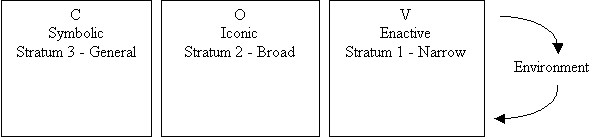
Figure 2. COVE model of agent cognition
Other agent models discussed below focus on emotional
responses and actions (e.g. how an agent might act on a battlefield, choose
from among options, or enact a story narrative) rather than on the combination
of cognition, psychology and behaviors in a learning environment; however, all
agent models implicitly employ a logical engine that cognizes the world in
terms such as the place, role, decisions, attitudes and goals of the agent. The
COVE model organizes the logical engine and resources needed to model teaching
and learning within the HPL-BCC frameworks.
The term “cognitive” is used here to mean the
components of intelligence in the “C” layer that are NOT the purely
physiological NOR the psychological components even though we agree with
Carroll (1966) that all the layers are equally “cognitive” in that some kind of
information processing and action is taking place in the
brain-body-environment. There are several widely varying theories of
intelligence that could be used as a foundation for computational modeling the
higher cognitive characteristics of learning. See (Sattler 2001) for a review of several
models, which might be classified into either hierarchical factor-analytic
(e.g. Spearman, Thorndike, Thurstone, Vernon, Cattell, Horn, Carroll), or
structural-functional models (e.g. Guilford, Campione, Brown & Borowski,
Sternberg, Gardner, Ceci, Piaget).
The COVE model uses a modified psychometric approach based
on the factor-analytic model proposed by Cattell-Horn-Carroll (the CHC theory
of intelligence) which has been validated with real world data from
intelligence tests. COVE also uses a blend of the structural theories, which are
needed to fully model the holistic context of the HPL-BCC framework.
Concerning CHC theory, the Institute for Applied
Psychometrics (McGrew 2003) notes:
The Cattell-Horn-Carroll (CHC)
theory of intelligence is the tent that houses the two most prominent
psychometric theoretical models of human cognitive abilities (Daniel 1997; Snow 1998;
Sternberg and Kaufman 1998). CHC theory represents the integration of the
Cattell-Horn Gf- Gc theory (Horn and Noll 1997) and Carroll’s three-stratum
theory (Carroll 1993; Carroll
1996).
According to the Cattell-Horn-Carroll (CHC) theory of
intelligence there are sixteen broad abilities, including factors such as fluid
(Gf) and crystallized (Gc) abilities, visual (Gv) and auditory (Ga) abilities,
short (Gsm) and long-term (Glr) memory, processing (Gs) and decision (Gt)
speed, and stores of knowledge. The COVE model arranges these sixteen factors
according to their roles in perception, processing, and crystallized knowledge
(Table 1).
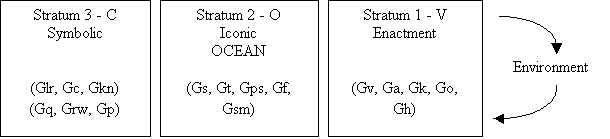
The “C” layer of the COVE model utilizes six of the CHC
factors to model conceptual knowledge: general storage and retrieval (Gc, Glr,
Gkn); and specific storage and retrieval abilities (Gq, Grw, Gp). The “O” layer
of the COVE model utilizes five CHC factors involved in processing and
reasoning (Gf, Gs, Gt, Gps, Gsm). The “V” layer of the COVE model includes the
five factors related to sensory perception (Gv, Ga, Gk, Go, Gh)
Table 1. The CHC factors organized by COVE. Adapted from (McGrew 2003)
|
V - PHYSICAL -
PERCEPTION
|
|
Visual-Spatial Abilities (Gv)
|
The Gv domain represents a collection of different
abilities each that emphasize a different process involved in the generation,
storage, retrieval and transformation (e.g., mentally reverse or rotate
shapes in space) of visual images.
|
|
Auditory Processing (Ga)
|
The Ga domain circumscribes a wide range of abilities
involved in discriminating patterns in sounds and musical structure (often
under background noise and/or distorting conditions) and the ability to
analyze, manipulate, comprehend and synthesize sound elements, groups of
sounds, or sound patterns.
|
|
Kinesthetic Abilities (Gk)
|
Abilities that depend on sensory receptors that detect
bodily position, weight, or movement of the muscles, tendons, and joints.
|
|
Olfactory Abilities (Go)
|
Abilities that depend on sensory receptors of the main
olfactory system (nasal chambers).
|
|
Tactile Abilities (Gh)
|
Abilities that depend on sensory receptors of the tactile
(touch) system for input and on the functioning of the tactile
apparatus.
|
|
O - PROCESSING
|
|
Fluid Intelligence/Reasoning (Gf)
|
Inductive (inference of a generalized conclusion from
particular instances) and deductive reasoning (the deriving of a conclusion
by reasoning; specifically: inference in which the conclusion about
particulars follows necessarily from general or universal premises) are
generally considered the hallmark indicators of Gf.
|
|
Cognitive Processing Speed (Gs)
|
The speed of executing automatized elementary cognitive
processes.
|
|
Decision/Reaction Time or Speed (Gt)
|
The ability to react and/or make decisions quickly in
response to simple stimuli.
|
|
Psychomotor Speed (Gps)
|
The ability to rapidly and fluently perform body motor
movements (movement of fingers, hands, legs, etc.) independent of cognitive
control.
|
|
Short-term Memory (Gsm)
|
The ability to apprehend and maintain awareness of
elements of information in the immediate situation (events that occurred in
the last minute or so). Gsm is a
limited-capacity system that loses information quickly through the decay of
memory traces, unless an individual activates other cognitive resources to
maintain the information in immediate awareness.
|
|
C - GENERAL STORAGE
& RETRIEVAL
|
|
Crystallized Intelligence/Knowledge (Gc)
|
Gc is typically described as a person’s breadth and depth
of acquired knowledge of the language, information and concepts of specific a
culture, and/or the application of this knowledge. Gc is primarily a store of verbal or language-based declarative
(knowing “what”) and procedural (knowing “how”) knowledge acquired through
the “investment” of other abilities during formal and informal educational
and general life experiences.
|
|
Long-term Storage and Retrieval (Glr)
|
The ability to store and consolidate new information in
long-term memory and later fluently retrieve the stored information (e.g.,
concepts, ideas, items, names) through association. Glr abilities have been
prominent in creativity research where they have been referred to as idea
production, ideational fluency, or associative fluency.
|
|
General (domain specific) Knowledge (Gkn)
|
Gkn reflects deep specialized knowledge (not culturally
universal) domains developed through intensive systematic practice and
training over time and the maintenance of the knowledge base through regular
practice and motivated effort.
|
|
C- SPECIFIC STORAGE
& RETRIEVAL
|
|
Quantitative Knowledge (Gq)
|
Gq represents an individual”s store of acquired
mathematical knowledge, not reasoning with this knowledge.
|
|
Reading/Writing (Grw)
|
A person’s wealth (breadth and depth) of acquired store of
declarative and procedural reading and writing skills and knowledge.
|
|
Psychomotor Abilities (Gp)
|
The ability to perform body motor movements (movement of
fingers, hands, legs, etc) with precision, coordination, or strength.
|
To model typical classroom performance there are also
specific “content knowledge” processes unique to the
subject area fields and primary sense modalities of a community of practice;
for example, music, mathematics, visual arts, and so forth (Gardner 1983). It is useful to consider the
kinds of externally available data concerning students in order to make a
selection of which dimensions will be most useful for a particular simulation.
If we want to simulate “mathematics learning” for example, it may be sufficient
in certain simulations to add factors to Gq specific to mathematics (e.g.
computation, problem-solving, communicating mathematical results) that are
often measured by assessments. This allows using external data sets from
achievement tests to configure realistic student agents.
For some simulation goals such as modeling classroom
behavior, the subject area dimensions are less important than the underlying psychological dimensions. Pilot studies and field tests with simSchool as well
as considerations of the combinatorial challenges have led to a design that
allows “swappable” cognitive dimensions as needed for a variety of simulation
scenarios. The COVE model assumes that a modeler can swap in and out as many
dimensions as needed for a specific simulation purpose, above a core of
processes taking place in the COVE layers.
For each cognitive dimension, the COVE model adopts either a bipolar continuum of
qualitatively different capabilities or a combination of an off-on state
integrated with a qualitative continuum. For example, in mathematics,
computation can be represented as a skill continuum where low numbers represent
basic arithmetic and high numbers represent abstract or symbolic computations
of higher orders. Or alternatively, the model could use a lower grain-sized
dimension such as “the ability to add numbers” and set the continuum to mean a
range of capability (e.g. from “cannot” to “exceeds mastery” of this skill).
The number of levels on the continuum can be selected to balance computational
flexibility with representational accuracy (e.g. typically from two to twenty).
The choice of number of levels and factors increases the computational
possibilities and challenges for modeling. For example, if each factor has “n”
number of distinguishable levels and interacts independently with “x” factors,
then the possibilities are n^x, which will increase exponentially with each new
factor. A fully connected 16 factor cognitive model with 5 levels on each
factor would have 5^16 (152,588,000,000) connection possibilities.
Fortunately, evidence for simplifying the number of
relationships through layering and hierarchical networks is available from intercorrelation
data among the broad factors (McGrew and Woodcock
2001).
For example, for people aged 14-19 who took part in the development and
standardization of the Woodcock-Johnson III, comprehensive knowledge (Gc) was
.62 correlated with fluid reasoning (Gf) but only .37 with processing speed
(Gs). In addition, structural and functional considerations suggest a narrowing
and channeling of the factors. For example, perception precedes cognition and
the consolidation of long-term memory is facilitated by emotional arousal (LaBar and Phelps 1998) implying that the layers
handling perception must link with emotional and psychological layers before
linking with long-term memory. The COVE model layers determine a particular
narrowing of the combinatorial possibilities.
The “O” layer is an interface between intelligence and
personality in which one’s psychological make-up is dominant and involved in
basic central information processing mediated by emotions. The “O” layer of the
model, following (Ortony, Clore and
Collins 1988)
assumes that emotional reactions, which develop during the cognitive appraisal
of a situation, influence performance. This section outlines the “O” layer’s
framework for individual psychology, connects that framework to processing
functions in the CHC theory of intelligence, and introduces a model of
emotional appraisal leading to behavior.
Individual psychology or personality theory in the COVE
model utilizes the “Five Factor Model of Personality,” “Big Five,” or OCEAN
model (Digman 1990; Ewen 1998). OCEAN stands for Openness, Conscientiousness, Extroversion,
Agreeableness and Neuroticism. Each factor has an opposite (e.g. the opposite
of Extroversion is Intraversion). The COVE model reverses the N scale defined
by psychometricians so that being “positive in N” means being emotionally
stable; which seems to accord better with the positive ends of the other four
scales, where being positive in the scale is generally positive for classroom
learning. An adapted terminology developed for business implementations (Howard and Howard 2000) places a “work friendly” tone
on the five factors (Table 2). The
Howard and Howard convention and reversal of the N scale is intended to make
the framework and language accessible to an educational audience, to better
serve the need to communicate with teachers and future teachers. In contrast,
the factor arrangement favored by psychological and psychometric professionals is EACNO based on lexical measures
as well as historical precedents within the field; see (Hofstee, de Raad and
Goldberg 1992).
The OCEAN taxonomy encompasses several important psychological characteristics of learners and in COVE, each is represented by a
continuum. The end of each continua has maximum value in a variable or its
opposite. For example, the “O” in OCEAN stands for “Openness to new experience
and a desire for originality.” Highly open people tend to have a variety of
interests and are drawn to cutting edge technology and strategic ideas.
Those who are low in openness tend to possess expert knowledge about a job, topic, or subject and a down-to-earth, here-and-now
view of the present. A learner low in “O” would prefer routines and would
feel comfortable practicing well-known skills, whereas someone high in “O”
would prefer novelty, challenge and the unknown.
Table 2. Psychological Characteristics adapted from (Howard and Howard 2000)
|
O =
Openness or Originality
|
The degree to which we are open to new experiences/new
ways of doing things. Highly open people tend to have a variety of interests
and like cutting edge technology as well as strategic ideas. Those who
are low in originality tend to possess expert knowledge about a job, topic, or subject while possessing a down-to-earth,
here-and-now view of the present.
|
|
C = Conscientiousness or Consolidation
|
Conscientiousness refers to the degree to which we push
toward goals at work. Highly conscientious people tend to work
towards goals in an industrious, disciplined, and dependable fashion.
Low consolidation people tend to approach goals in a relaxed, spontaneous,
and open-ended fashion and are usually capable of multi-tasking and being
involved in many projects and goals at the same time.
|
|
E =
Extraversion
|
Extraversion refers to the degree to which a person can
tolerate sensory stimulation from people and situations. Those who
score high on extraversion are characterized by their preference of being
around other people and involved in many activities. Introversion at
the other end of the scale is characterized by one’s preference to work alone
and is typically described as serious, skeptical, quiet, and a private
person.
|
|
A =
Agreeableness or Accommodation
|
Accommodation refers to the degree to which we defer to
others. Agreeable people tend to relate to others by being tolerant,
agreeable and accepting of others. Low accommodation or disagreeable people
tend to relate to others by being tough, guarded, persistent, competitive or
aggressive.
|
|
N =
Emotional Stability or Need for Stability
|
At one extreme of the need for stability continuum, highly
reactive people experience more negative emotions than most
people and who reports less satisfaction with life than most people. At
the other extreme, highly stable people don’t get emotionally involved with
others and may seem aloof or stoic.
|
As an example, in simSchool, the OCEAN variables are set on
a scale from –1 to 1, with 0 at the midpoint, which allows a software agent to possess values representing the full range. SimSchool divides
the scale into .1 units, giving 21 positions from –1 to 1 (e.g. –1, -.9, -.8 …
.8, .9, 1). This gives the psychological portion of the agent learning model a mathematical possibility of representing 21^5 or
about 4 million OCEAN personalities. The SimSchool application (www.simschool.org) narrows the
possibilities by grouping the variables into a 5-position narrative for each of
the Big Five, representing clusters near –1, -.5, 0, .5 and 1. This provides
3,125 different narratives for the OCEAN personalities. The SimSchool
narratives divide each of the psychological components into two extremes (e.g.
extremely extroverted or introverted) two moderate positions (moderately
extroverted or introverted) and one ambivalent or balanced position. Narratives
are dynamically assembled from the database for each unique personality and
presented to the user on demand (Figure 3).
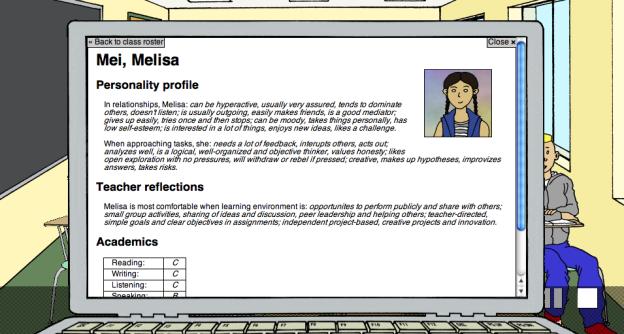
Figure 3. Psychological characteristics
of a simulated student in simSchool.
In the remainder of this section OCEAN is linked to the CHC
theory of intelligence as well as a model of the subjective process of
appraisal leading to behavior. Linking the OCEAN to CHC was recently proposed (Chamorro-Premuzic and
Furnham 2004)
based on correlation evidence from studies of subjectively assessed
intelligence (SAI). An example of SAI is a student who has often failed tests,
which leads the student to an expectation to fail a future test, and lowered
performance on the test influenced by that appraisal. Citing a number of
studies, Chamorro-Premuzic and Furnham propose that SAI mediates between
personality, intelligence and performance, and list a number of correlations
noted by researchers, including:
- (Gf)
and (Gc) are both positively correlated with performance
- Personality
traits are significant predictors of academic achievement
- Openness
is positively correlated with intelligence
- Conscientiousness
is a positive predictor of performance
- Extraversion
is positively correlated with intelligence due to higher speed of response
and lower arousal level
- Neuroticism
is a negative predictor
The COVE model links OCEAN to CHC at the “O” layer
reasoning that OCEAN is more complex than receptors and perception at layer
“V”, and less complex than conceptualization and long term memory at layer “C.”
In addition, following (Eysenck and Eysenck
1985)
who suggested that SAI should be considered a part of personality rather than
intelligence and (Chamorro-Premuzic and
Furnham 2004)
who note the “considerable conceptual overlap between the concept of SAI
and Openness” (p. 256), the COVE model layer “O” positions psychology,
emotions, and reasoning fluidity (Gf) to fulfill the SAI appraisal function.
The correlation evidence and structural-functional
considerations leads to a model of “O” that includes causal precedence (Figure
4). Intercorrelation of Neuroticism and Extroversion with Openness,
Conscientiousness and Agreeableness is suggested based on neurophysiological
evidence from animal and human studies that posits two large clusters: (1)
Extraversion, Exploration, Novelty seeking, Sensation Seeking, Positive Affectivity
and Impulsiveness, versus (2) Neuroticism, Anxiety, Fearfulness and Negative
Affectivity (Budaev 2000). The two large E & N
clusters are mediated by independent neurobiological mechanisms (e.g.
catecholamines, dopamine and norepinephrine for E; and the amygdala and the
benzodiazepine / GABA receptor system for N). The arrow from processing speeds
(Gs, Gt, Gps) to N indicates an inverse correlation (e.g. higher speeds
correlate with lower emotional stability). The other arrows in Figure 4
represent positive correlations (keep in mind that the negative correlation
found in the literature has been reversed on the N scale).
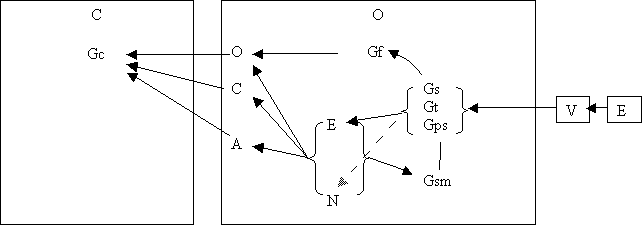
Figure 4. Linking CHC to OCEAN variables
The pathways in Figure 4 focus on the “incoming” signals
leading to crystallized knowledge; however, returning pathways from pattern
formation, recognition, beliefs, and decisions to intentions and action exist
at every level too. A cognitive structure of emotion-based decision-making
known as the OCC model (Ortony, Clore et al.
1988)
has influenced computer modeling of autonomous agents and artificial
intelligence, and deals with both incoming and outgoing information. In the OCC
model emotions are viewed as “valenced reactions to events, agents or objects.”
That is, the type and strength of an emotion depends on stimuli in the agent’s
environment. The stimuli are mapped to a “valence,” a positive or negative
score, by a process called “appraisal.” The parallel between appraisal and
subjectively assessed intelligence (SAI) discussed above suggests a need for an
expansion of concepts in the “O” layer that help explain how OCEAN variables
influence various types of appraisals. The simSchool model developed to date
narrows the focus of appraisal to that of learning task performance (objects),
teacher conversations (agent) and their evolution in sequences (events).
In addition, constructs from models of emotion-based
behavior utilize higher levels of abstraction, such as Beliefs, Desires and
Intentions (Rao and Georgeff 1991;
Busetta, Bailey and Ramamohanarao 2002; Casali, Godo and Sierra 2004)
and Disposition, Emotion, Trigger, and Tendency (Parunak, Bisson,
Brueckner, Matthews and Sauter 2006). Comparing these with the
COVE model, the “O” layer should include links to Desires and Intentions
(Beliefs are perhaps a longer-term object of memory and belong in the “C”
layer) and to all but the “Triggers” in the DETT model (which would perhaps
come from the “V” layer) indicating that additional work is needed to integrate
these higher-level constructs with the CHC-OCEAN level of abstraction at the
“O” layer. The BDI, DETT, OCC and other models are discussed further below.
The physiological characteristics involved in learning entail
both sensory (afferent) and motor (efferent) neural pathways. While learning is
sometimes thought of as primarily the organization of incoming sensory signals,
recent work in artificial intelligence and robotics as well as constructivist
learning theories suggests that pre-motor and motor systems - the body’s
exploration and action in the world -
plays a major role in the development of intelligence (Pfeifer and Bongard
2007).
This important potential for action and feedback is addressed below in the
sections on knowledge, assessment and feedback. COVE concentrates on the
sensory components of learning, which are also represented in the CHC theory of
intelligence as visual (Gv), auditory (Ga), kinesthetic (Gk), olfactory (Go)
and haptic (Gh). In the simSchool engine, only (Gv, Ga, Gk) are used since
those are more typical in classroom learning.
In these physiological “V” variables, unlike the bipolar “O” psychological variables that
are always present to some degree, there is the possibility of a complete
absence of an input pathway, such as in blindness or deafness. This suggests
using a threshold level in addition to a range of ability or preference. The
concept of preference is useful for connecting the model to “learning styles
theory” (Silver, Strong and
Perini 2000; Lemire 2002)
and that of ability is useful for connecting to theories of intelligence. For
example, if someone is not blind, then to what extent do they tend to favor or
prefer to organize learning through the visual pathway? For model simplicity,
simSchool uses the 0 position on a scale of zero to ten to represent complete
absence of the pathway and all other positions to assume presence plus a degree
of preference.
The COV layers together allow the representation of a wide
range of learning behaviors (Figure 5) and offer an organizing framework for
future development of agent personality.
The
“E” layer of Environment variables includes learning tasks (objects),
interpersonal relationships and social expectations states theory (agents) and
the effects of sequences of interactions (events). In the HPL learning theory
environment includes “community,” which reflects the social context of learning
and the feedback role of external “assessment.” In addition, some aspects of
the nature of “knowledge” itself are certainly external to the individual
learner. HPL thus contextualizes cognition as an interaction of internal and
external factors, not solely as an “information processing” or “knowledge
acquisition” problem of an individual. The chapter discusses these factors more
fully after a brief introduction of and comparison to alternative agent
modeling frameworks: the Brisbane, OCC, BDI, and DETT models
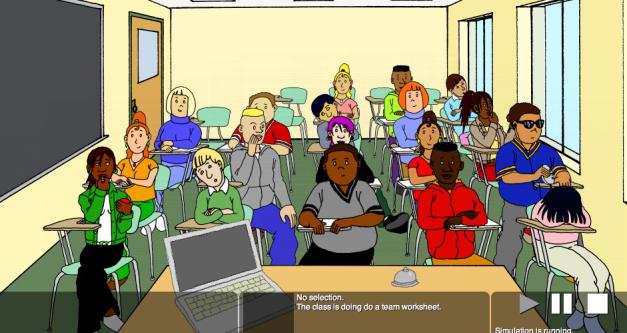
Figure 5. A simSchool learning setting
with individualized personalities, attitudes and behaviors.
A research group in Brisbane (Su, Pham and Wardhani
2006; Su, Binh and Wardihani 2007)
uses an abridged version of the Big Five (AB5C, see (Hofstee, de Raad et al.
1992))
and a story-boarding interface to facilitate the personality and emotion
control of the body language of a dynamic story character. Game and simulation
designers can devise a story context, which their engine then uses to
predictably motivate personality and emotion values to drive the appropriate
movements of the characters. In the Brisbane model, personality, emotion,
self-motivation, social relationships, and behavioral capabilities are taken
into account together. The Brisbane method of dealing with the OCEAN variables
produces 32 personality combinations that provide descriptive lexicons for
their computational personality model.
The research-based lexicon of personality terms used in
the Brisbane model is defined by a “high and low” position on each of the OCEAN
variables (10 possible positions). Then the OCEAN variables are taken in pairs,
representing a major and minor loading on a personality trait. This produces
10*9 or 90 possible traits, which the Brisbane team simplifies to 32
personality combinations. For example, a software agent might be described as
“conventional, traditional, prim, mundane, and law abiding” if the agent is low
on Openness and high on Conscientiousness.
The OCC model (Ortony, Clore et al.
1988)
presents a cognitive framework for emotional reactions, including behavior. An
agent’s emotional
reaction is initiated with a triggering event that is appraised in conjunction
with a prior emotional state as well as inputs from the rest of the
environment. Three classes of emotion (being pleased or not in reaction to
events, approving or not in reaction to agents, and liking or not in reaction
to objects) have the simplest “eliciting conditions” and thus in a sense the
most basic emotional reactions (p.33). These classes are then differentiated
further to produce six groups of emotion types: Fortunes-of-Others, Prospects for
Self, Well-Being, Attribution, Attraction and a compound group of both
Well-Being and Attribution (Figure 6). Emotions are represented as a set of
“substantially independent groups based on their cognitive origins” (events,
agents or objects) and responses are determined by the way that an agent
“construes the world or changes in it” which causes a “valenced reaction”
within the six types (p. 13).
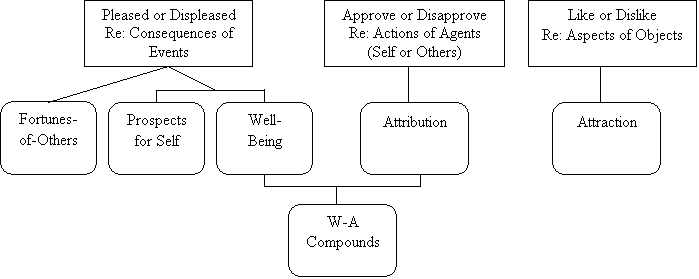
Figure 6. OCC emotion classes and types. Adapted from
Ortony, Clone & Collins 1998
Several games and simulation developers have used the OCC
model as a basis for agent action (Silverman 2001; Morris
2002; Gratch and Marsella 2004; Bartneck n.d.; Egges, Kshirsagar and
Magnenat-Thalmann n.d.)
however, the model has not been documented in use in a simulation of a
classroom or teaching.
The BDI model (Bratman 1987) uses concepts of belief,
desire and intention (Rao and Georgeff 1991) and is a mature and commonly
adopted “bounded rationality” (Simon 1955) architecture for intelligent
agents; it is “an abstract architecture of a family of parallel and distributed
systems” (Busetta, Bailey et al.
2002).
Beliefs are formed from sensor-based
perceptions while Desires are
long-term goals. Both feed into an analysis that includes procedural knowledge
encoded as action step sequences (Plans)
from which a current state of actions is drawn (Intention), which then changes agents’ relationship to the Environment through Effectors (Figure 7). Environments (such as classrooms or the
multitude of mental models in an individual considering alternatives) can be
highly uncertain; in uncertain circumstances bounded rationality models are
often “stiff.” That is, they only know how to deal with a narrow version of
reality and may fail when situations get complex or uncertain. Solutions have
been proposed by extending the semantics of intentions for collective action of
groups of agents and by adding more flexible algorithms.
The operational semantics of intentions can be extended to
collaborative tasks involving team of agents by using distributed nested
transactions (Busetta, Bailey et al.
2002),
giving the BDI model a robust, reliable foundation. Distributing the Intention across several cooperating
agents increases reliability by engaging several agents in parallel fulfillment
of an objective. This increases performance when uncertain events in the
environment interfere with or exceed the boundaries of the Plan. In a classroom example, there may be both individual and
group applications. For example, when a learner employs multiple strategies to
solve a problem, or “multi-tasks” when solving a problem, or when a
collaborative learning group divides a problem into parts, may be cases where
the BDI model would be helpful.
Figure 7. BDI model. Adapted
from (Busetta, Bailey et al.
2002)
Another approach to help deal
with uncertainty expands the bounded rationality of the BDI system with a
“graded BDI agent” approach (Casali, Godo et al.
2004).
BDI seems applicable to representations of collaborative action as well as in
individual goal-directed behaviors and may well find its way into simulated
teaching environments in the future.
The Disposition, Emotion, Trigger, Tendency (DETT) model of
emotion (Parunak, Bisson,
Brueckner, Matthews and Sauter 2006) for situated agents captures
the essential features of both the OCC and BDI models in a computational
framework for combat simulations. Having developed in a military context, the
DETT model is an environmentally mediated model of emotion in a computationally
tractable framework that can support large numbers of combatants. Because of
the battlefield context, the DETT theorists sought to minimize “extensive
symbolic reasoning” in the agents, a critical feature with important details
for learning theorists, especially cognitivists and constructivists. For this
reason, the model may have only limited applications in a simulation of
teaching and learning. DETT may be applicable to classroom and school settings
where large-scale group interactions are the focus of the simulation.
In spite of the limitation of the simplification of an
agent’s internal processing, the DETT model serves as a useful example and can
be compared to the simSchool framework’s simplification of psychology and
cognition. The simplification of emotional reasoning in DETT comes from
quantizing critical values into –1, +1 (e.g. avoid, move toward). In simSchool,
a simplification of cognition and classroom behavior occurs at two levels: five
positions on each critical variable are used to build adaptive narratives that
describe the learner’s characteristics, and at the deeper level of the logic
engine, 21 positions (i.e. –1, -.9…0…+.9, +1) are used in the calculations
representing “cognition and classroom performance.”
In addition DETT introduces persistent states into the
agent-environment interaction, as does simSchool. There is a 1:1 relationship
between Dispositions and Emotions, in simSchool there is a 1:1
relationship between a task (compare with Desire
in the BDI model) and the COVE model
of the learner. Dispositions remain constant during a simulation, where
Emotions can vary. In simSchool, the task (object) remains invariant for as
long as the teacher has it assigned and the physiological variables also remain
constant during the simulation; the learner’s O & C variables adapt to the
changing landscape of tasks, agents and events faced as time evolves in the
simulation.
Comparing these several models (Table 3) highlights
differences that arise due to variations in the goals for agent behaviors
computed by the models.
Table 3. Models of agent personality
|
Model
|
Focus
|
Goals
|
|
COVE
simSchool
|
Classroom learning and behavior
|
To model how people learn and how teachers impact learning
through teaching
|
|
Brisbane
|
3D body movement and expression
|
To provide a visual platform for agents to simulate
storytelling sequences with consistent personality performance and reflection
of inner feelings or emotions
|
|
OCC
|
Cognitive structure of emotions
|
To model and understand emotional reactions to people,
objects, and events
|
|
BDI
|
Decision system for action based on perceptions, long-term
goals and short-term intentions
|
|
|
DETT
|
Decision system for action based on dispositions,
emotions, triggers and tendencies
|
To model rational behavior of large populations of agents
|
In order to teach a teacher to teach, the simulation has to deal with knowledge acquisition by students; you will recall that the students are “agents” in our
model. The simulation has to represent how learning can occur within the agent and also, how much of it has occurred as a result of the user’s
interactions. In addition, another challenge is to what extent the agent will
be able to appear to know things. We’ll deal first with the process of
acquiring, then the content and appearance of knowledge in agents.
Knowledge (e.g. a fact, a spatiotemporal sequence, a memory)
is acquired incrementally over time and is integrated into what is already
known, using dynamics and processes that are present in the evolution of all
systems. We are confident of these features based on theoretical as well as
biological grounds. On theoretical grounds we know that real evolving systems
extend into the future based on immediate and irreversible past processes (Prigogine 1996; Bar-Yam
1997; Beinhocker 2006).
Who we are now is who we just were, with some slight change, and we cannot go
back to who we were, ever. The one-way arrow of time is a crucial aspect of
system evolution that is central to ideas about learning and means that knowledge is dynamic, transient, historical, and highly dependent upon
context. On biological grounds we know that cortical functioning maps the
spatiotemporal structure of reality (Braitenberg 1984;
Edelman and Tononi 1995)
which naturally leads to a hierarchical temporal structure of memory (Hawkins and Blakeslee
2004).
A computational bridge between biology and mathematics has been provided by
Holland and others (Holland, Holyoak,
Nisbett and Thagard 1986)
who have shown how “default hierarchies” in a complex network of rules are
involved in inference, learning and discovery. A frog, for example, might have
a set of rules it has learned to stick out its tongue to catch all small fast
moving flying things except ones that
(it learns later) fit a description for “wasps.” As the default rules are
expanded to deal with exceptions, discoveries are joined with the existing
hierarchy of rules allowing for beneficial future predictions. So with respect
to acquiring knowledge, the agent in our proposed game needs to use its immediate past state to create a new, slightly
different state, using inputs from the environment organized according to the
laws of physics and the statistical mechanics of complex networks (Albert and
Albert-Laszio 2002).
Making incremental changes in the current state can be
evaluated in relation to the immediate past state. “Am I more hungry or less,
now that I ate my morning bagel?” This produces backward-looking knowledge or
reflection. Can the agent also look forward in time? Certainly, autonomous agents do as they
enact their lives in the real world (Holland 1998; Kauffman
2000; Baum 2004; Hawkins and Blakeslee 2004; Pfeifer and Bongard 2007).
In simSchool, a stand-in for autonomous planning and goal-setting is used to
attract the agent’s states forward through time. Something similar to this
happens at the evolutionary time scale as the landscape of environmental
factors shapes the species; the requirements act as de facto goals whether the agents are aware of them or not. As
animals reach the goals, they develop expertise. “Most animals,” according to (Brooks 1999) “have significant behavioral
expertise built in without having to explicitly learn it all from scratch. This
expertise is a product of evolution of the organism; it can be viewed as a very
long term form of learning which provides a structured system within which
individuals might learn more specialized skills of abilities” (p. 28). In the
simSchool application, tasks and teacher talk form the goal environment or
“problem space” for the simulated student
agents.
One reason to use externally supplied goals instead of
autonomous goals is that artificial intelligence researchers are just beginning
to understand how planning and goal setting works in an evolutionary context,
and it appears that long periods of time are required to develop autonomous
goals. Because the teaching simulation needs to highlight the relationships among a student, a teacher,
and the artifacts and evidence of learning in a classroom setting, it seems
practical for our current state of knowledge to seed the system with high level
goals that short-cut the evolutionary timescale that would be needed if
starting from scratch. There is a drawback to this choice. Our initial choice
of external goals biases the model; however, all models, and the inductions
they allow, have some kind of bias that simplifies the world (Holland, Holyoak et al.
1986; Holland 1998; Baum 2004) so the proposed framework is similar to all
models in this respect.
The bias concerning the acquisition of knowledge starts with the notion that everyone (and every living thing) is
in the business of learning throughout life. This innate striving to understand
is a natural inner drive. As Art Costa once told a room full of educators (Costa 1999), even a stored potato,
plucked from its mother plant and tucked away in a dark root cellar on a shelf,
sends out shoots trying to find light, soil and water. Things want to live out
their potential and for humans that includes learning. The agents in the game of teaching (e.g. simSchool) are therefore seeking to adapt and
trying to meet the requirements of the teacher’s tasks and intentions as
signified in assignments and conversation.
In simSchool, each assignment given by a teacher sets a goal
for the student, and given enough time and support, that student can almost
always adapt to the requirements of that task. Each task is a new “problem
space:task model” for the agent. As the agent encounters new
problems, it takes a series of small steps, tinkering, making tentative
hypotheses and seeking validation via evaluation functions that result in “hill
climbing” toward its goals (Baum 2004). Knowledge acquisition occurs
as progress is made toward the task’s goals. The model has thus substituted
external goals for autonomous goals. One of the signs of this dynamic is how
students individually react to each action of the teacher with body language
and talking behaviors (Figure 4).
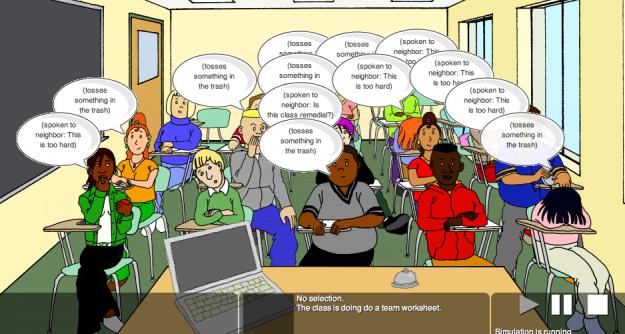
Figure 4. Conversation and body language
differences in simSchool.
In the future, as AI improves, autonomous goals can enter
the model; but note that in normal school settings, real students suspend many
of their autonomous goals to do what the teacher says and the school requires.
This leads to a state of affairs that has occupied sociocultural theorists of
education in the past; the balance of individual autonomy with the needs of
enculturation of the next generation. The section on “community” below takes up this theme in an abstract way,
but for now, the idea of knowledge acquisition is focused on how the
hill-climbing search (and other methods) for understanding leads to expertise –
an internal mapping – of units of knowledge.
The content of knowledge can be classified by two broad categories of knowledge: “know-how”
(procedural, tacit
knowledge) and “know-that”
(declarative, descriptive, propositional knowledge). Know-how, since it is
largely tacit, cannot be easily talked about or represented; it must be
enacted. For example, try telling someone how to ride a bike. Is that enough
knowledge to enable riding? Some aspects of procedural knowledge and skills
(e.g. walking, playing a musical instrument) seem to migrate from conscious
efforts into know-how. That is what allows you to attempt to tell someone how
to ride a bike. Other kinds of procedural knowledge (e.g. turning food into
metabolic energy and nutrients) are innate. An evolutionary view of knowledge
that includes everything from DNA to culture would argue that all knowledge is
fundamentally know-how, some of which gets dressed up as know-that through the
use of labels (see (Holland and Reitman
1978; Baum 2004; Pink 2005; Pfeifer and Bongard 2007).
For example, I say “cat” and you recall a series of your life experiences
unlike anything that anyone else on earth has experienced; yet you understand
what I mean (if you speak English and know what a cat is). You cannot possibly
tell me or anyone else, including yourself, all of the experiences that combine
to form your response to the word “cat,” so what you do is tacitly accept the
label from me, assuming that we probably share a large portion of similar
experiences signified by that token. The philosopher Hilary Putnam calls this
"the charity of interpretation" (Putnam 1992). Semantics and understanding
enters in via compression and labeling of know-how (Baum 2004).
Know-how is the most abundant kind of knowledge, but being tacit, it doesn’t
appear in textbooks, lectures and tests. Declarative knowledge on the other
hand, while ubiquitous in teaching and assessment, is little appreciated as a
label for know-how. As Kauffman (Kauffman 2000) says “Know-that is a thin
veneer on a four-billion-year-old know-how skill abundant in the biosphere” (p.
111). On that thin layer of labels (the knowledge that we can talk about) rests
all of humanity’s cultural artifacts.
Both kinds of knowledge should be evident a simulation of classroom learning. The agents who are learning
as a result of the actions of the user would then “know-how” to react and act
in the simulation, and if asked, the agents would be able to say something
useful to the user to show that they “know that” something exists or is true.
The process of acquiring knowledge is incremental, an expansion driven by evolutionary forces on
agents seeking solutions or resolutions of goals. The narrative has indicated
that the shape of the solutions is a hierarchical temporal structure. Several
writers give a picture of what one level of a hierarchy “knows” about the
levels below it, and what that level projects to the next level “up” or “down”
in the hierarchy. This section explores these concepts as a foundation for
knowledge and behavior exhibited by the agent. Games and simulations that
teach teachers will have simulated students that behave like real students;
they will seem to “know” and “learn” using a cognitive framework with hierarchy, temporality and agency.
Daniel Dennett (Dennett 1995) and Victor Braitenberg (Braitenberg 1984) give two pictures of
increasing complexity in independent agents or agency at several levels in a cognitive hierarchy. Dennett’s colorful image is of four kinds of
“creatures” and Braitenberg uses the idea of robotic “vehicles” to make many of
the same points. Dennett’s creatures are Darwinian, Pavlovian, Popperian, Gregorian.
Darwinian creatures evolve by simple mutation,
recombination, and selection made by fitness on a landscape that serves as the
evaluation function. For those unfamiliar with evolutionary concepts outside of
biology, see (Platek, Keenan and
Shackelford 2006)
for an introduction to evolutionary
cognitive neuroscience and (Cosmides and Tooby
2007)
for evolutionary psychology. No behavioral learning is possible at the
Darwinian level, so modeling of how people learn should not start at this
level, although the model may need to account for this level of dynamics at some
point. The model needs simulated student agents who can appear to learn.
At the next level up, in Pavolvian creatures, there is a
nervous system and stimulus-response learning is possible. The behaviorist
tradition in education takes its foundation here, but simulated students should
be more complex than aplysia, so the
model needs to be built higher up in the hierarchy in order to function more
realistically for teacher education.
Next is the Popperian level. Those unfamiliar with Karl
Popper (Popper 1959) may find it interesting that
he showed that scientific theories are never proven true, but are held
tentatively until they are falsified – that is, until they are shown to be
inadequate due to new knowledge including better models. The possibility of
falsification underpins the role of models and theory in science, as well as in
the proposed cognitive framework for simulated students.
Since we have already seen that models are incomplete simplifications of the world, the Popperian level
is a good starting point for representing how people learn and what knowledge they possess. Creatures at this level have internal models and can
simulate or run the models disengaged from the world. This appears to be a
potential foundation for thought, reflection and prediction. A Popperian agent learns and possesses incomplete simplifications of the world that
are always ready to be improved with new information. The agents in the
simulations of how people learn should be capable of this sort of learning and
knowledge.
Gregorian creatures at Dennett’s fourth level use tools to
create a shared base of knowledge or culture. At the current stage of AI, it is hard to envision a
day when software agents will create and use cultural artifacts. However, it
seems to be a technical rather than a fundamental question. The Gregorian level
would be ideal for a simulated student, because then the student could produce
his or her own original work for teacher grading.
Braitenberg (Braitenberg 1984) gives much the same picture,
but uses a synthetic constructive approach, building up from a concept of a
simple vehicle at the lowest level. As he introduces more and more complexity,
he names the vehicles for the primary activity allowed by each new level. For
example, the simplest vehicle is “Getting Around” which connects a single sensor
directly to a single motor. The propulsion of the motor is directly
proportional to the signal being detected by the sensor. Imagine that this
vehicle is swimming around in water and the sensor detects temperature. You
might find the agent speeding up in warm spots, slowing down in the cold (or vice
versa). Given the existence of currents and friction, the vehicle might behave
erratically giving an animated impression of “life” similar to the Brownian
motion of pollen and dust particles in water.
The next vehicle has two sensors and two motors connected in
either a straight line fashion or crossed so that the left sensor operates the
right motor and vice versa. The idea of crossing connections emulates the
crossed fibers in the human corpus callosum that gives rise to our “left-brain
vs. right-brain” cognitive architecture. This vehicle is called “Fear and Aggression,”
because in the straight-line configuration, certain environmental sources (e.g.
whatever the sensor detects) attract the agent to rush toward the source while in the crossed-line configuration,
the agent avoids those sources. An agent with several sensors and motors with
both straight-line and crossed connections will seem to be attracted or
repelled by a variety sources in the environmental landscape. This kind of
modeling – with the agent attracted by some features of the learning task or
environment and repelled by others - is an essential feature of the simulated
student. In simSchool, each individual student is attracted by the current
features of the problem
space, which gives rise to
incremental improvements in performances in some variables and drops in others
(Figure 5).
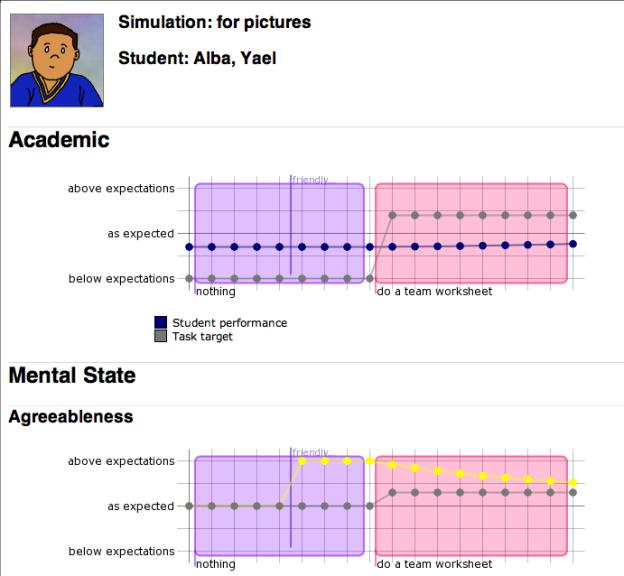
Figure 5. A simSchool student gains or loses in performance
in relation to problem space settings. Yael gains slowly in academic
performance and loses ground in agreeableness based on the task settings for
doing a team worksheet.
Braitenberg’s vehicles range from simple locomotion to
trains of thought and even egotism. The sensorimotor network arrangements of
the vehicles describe levels and kinds of agency possible within a hierarchical network by virtue of the
configurations of connections between layers.
To bring these metaphoric pictures into the simulated
student’s knowledge, the creatures and vehicles
can be thought of as nodes or groups of nodes within levels of a network
hierarchy that changes over time. In a neural net, the nodes are metaphorically
called “neurons,” nodes, node complexes or simply variables.
A hierarchical temporal network embodies knowledge in a computational structure (Hawkins and Blakeslee
2004).
Results are computed from incoming information (e.g. integration, Piagetian
equilibration) and decisions are computed, including updates and actions (e.g.
retrieval from memory, coordination, communication). Cognitive and social
constructivists (Bruner 1960; Vygotsky
1962; Piaget 1973; Piaget 1985)
are validated by this model because the semantics or meaning within all this
signaling is constantly being constructed and shared across agent-community
boundaries. Feminist theorists (Haraway 1988; Weiler
1991)
will note that a multiplicity of perspectives and partial truths are vying for
attention and control within the cognitive system. As the cognitive system reaches high levels of complexity,
it includes cultural and social artifacts while preserving the dynamics of the
structure of knowledge that emerge in the temporal hierarchy.
Each node of the hierarchy is a semi-independent subagent or
center of agency in that it operates automatically on all its incoming information
but can be interrupted by a higher-level subagent subsuming its role. In Robby
Brooks’ (Brooks 1986) “subsumption architecture”
terminology, the intelligent system is decomposed into independent and parallel
“activity producers.” Activity theorists (Engeström, Miettinen
and Punamäki 1998)
would agree with the concept of agency arising from activity in the world. In
particular, Brook’s concept is that cognition is itself the intersection of
perception and action and not an independent mediating structure between them.
As a result of this insight, the model of acquiring knowledge needed in the design framework is not separate from the perceiving
of inputs and production of behavior of the student. If we achieve sufficient
complexity in node-cluster agency in the hierarchical and temporal structure
then it will appear to an outside observer (even the “self”) as cognition. We
do not have to build a separate cognition box, but instead, allow for
increasing levels of complexity emerging from a common core of functions.
The concept of agency has two meanings to draw out: first, how a result is obtained or
an end is achieved, and second, acting on behalf of or representing another.
There may be another meaning of agency to bring in eventually, for example, the
concept of “acting freely” or “on one’s free will.” For now, it suffices to
think of a hierarchy of nodes where in general, a “higher level” means fewer
nodes receiving signals from and mapping back downward onto a larger number of
“lower level” nodes.
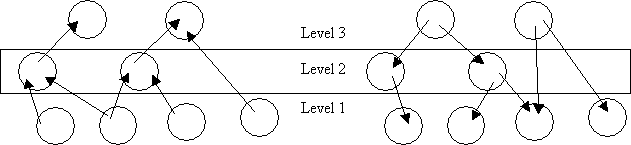
Figure 6. A single network hierarchy
with different “up” and “down” flows
To help with understanding the belief-prediction structure,
John Holland (Holland 1995) explains two basic concepts
of agents that we can make use of at this point: aggregation (a property) and
tagging (a mechanism). Aggregation occurs at each higher level in the
hierarchy. A node aggregates features from the layer below it. Baum notes that an aggregating node creates
a more compact description of the world (Baum 2004) – a label - which is
equivalent to that layer’s understanding of the world below it, which is consistent
with Hawkin’s “beliefs.” The node can then can send a message to the next
higher level as a compact description and use its understanding to control the
layers below. The node’s compact description is interpreted by the level above
as a tag, label or belief (e.g. “cat”) for the complex composition of features
below (e.g. all the “cat-related” associations you have made since birth, maybe
since the beginning of time). The node also uses lower level tags (e.g. things
that are whisker-like, things that are furry-like) to select, categorize and
predict incoming features from below. Tagging or labeling thus facilitates
aggregation by pointing out what things belong together and it facilitates
recognition and categorization by compressing information about the world
below.
As illustrated in Figure 6, the mapping of transitions up
and down the hierarchy is more complex than 1:1. Nodes can classify the world
in more than one category and can also direct behavior of more than one action.
The tentative nature of the classification points out that the agent’s model of the world is not
completely valid (recall Popperian falsification and the partial truths of
Feminist philosophy). The layers of transition functions Holland calls “quasi-homomorphisms” or “Q-morphisms”
(Holland, Holyoak et al.
1986).
We can think of the world model available at any particular level of the
hierarchy as providing default settings for making predictions about the
incoming level from below; and the level below evokes exceptions that force
reworking the model. Here is Piagetian constructivism in action at the atomic
level – remodeling the world based on present needs given by new information.
We now have a background to summarize how the simulation can represent how learning can occur within the agent. In summary, each student’s knowledge is represented by a set of node or variable
complexes that are updated as the simulation play moves forward in time.
We can think of the nodes as computational processes or
alternatively as simple or complex variables, depending on the “grain size”
needs for modeling. “Grain size” sets a boundary that determines what a model
can simulate and represent as well as what may be emergent and difficult to
represent. For example, if the model is at a very high-level of grain size
(e.g. whole individuals interacting in an environment) then the internal
lower-level details may be hidden from view (e.g. what is motivating each
individual to interact). For example, to model learning theories such as
behaviorism, cognitivism and constructivism the focus has to be many levels
distant from the neurophysiological level. The agent-based
hierarchical-temporal cognitive network framework developed thus far implies that in such a
high-level simulation, cognition amounts to dealing with labels that represent,
stand in for and call upon, lower level complex functions. Those labels are the
understandings that the agent possesses that enable it to act in the world. This is how we as
well as agents understand things.
As an aside, a software agent is not presumed to possess human understanding, only that it can
understand things in its own terms and that a sufficient level of complexity
can be reached to utilize the agent as a model of student learning for the
purpose of teaching a teacher how people learn. A rich and detailed
philosophical history has unfolded around questions of artificial intelligence.
The bias of this chapter is that AI is one of many forms of intelligence and
can theoretically reach sufficient levels of complexity to pass the Turing
test. However, it should not matter what side of the debate one is on (e.g.
whether one believes that AI is intelligence at all or to what extent it is) in
order to entertain the idea that a simulation of classroom learning might be possible that would improve upon
the current methods of teacher preparation, mentoring and professional growth.
At this point, we have a knowledge structure
and acquisition process that is one and the same thing – a constantly
maintained hierarchical temporal complex network in which agents:
- Use
immediate past states to create new, slightly different states, using
inputs from the environment organized according to the laws of physics and
the statistical mechanics of complex networks
- Are
attracted to and repelled by sources in the environment acting as goals
- Acquire
knowledge as incremental progress is made toward
goals driven by evolutionary dynamics
- Exhibit
know-how and know-that types of knowledge
- Know
and learn things using a cognitive framework with hierarchy, temporality
and agency
- Possess
incomplete simplifications of the world that are always ready to be
improved with new information
- Use
internal models and can simulate or run the models disengaged from the
world.
- Respond
to attractors and repellors within the environmental landscape
In order to exhibit more complexity in the classroom, the
HPL-BCC computational framework needs to include agents that not only know some
things, and learn other things, but know how to learn.
Hawkin’s idea is that network nodes have four functions
present at all levels of the hierarchical temporal cognitive complex - a “common
algorithm” inspired by the human neocortex (Hawkins and Blakeslee
2004).
The first two functions are required at every level; the last two are optional.
1)
Discover causes in the world
2)
Infer causes of novel input
3)
Make predictions
4)
Direct behavior
Discovery of causes is accomplished by categorizing
persistent patterns of incoming information, such as in the “cat” example. The
structuring of this input into hierarchical and temporal chunks resonates with
past knowledge (e.g. recognition, remembering) and incrementally updates the
knowledge structure (e.g. learning new patterns and variations). To accomplish
both functions, the node has to classify its input. For example in recognition:
“IF I see a furry creature with four legs AND IF it has whiskers AND IF it also
has a long tail, THEN it might be a cat.” Note the rule-based nature of
classification and the tentative conclusion. Discoveries (new conclusions) are
also tentative: “This is like a cat, but it is slightly different than any cat
I’ve ever seen.” Note the need to adapt the rule in order to discover a new
cause in the world.
Classifier systems as developed by Holland and others (Holland and Reitman
1978; Holland, Holyoak et al. 1986) contain mechanisms for
adaptively generating new rules, processing rules in parallel and evaluating
the rules in relation to selection criteria. Rules classify input by matching
and ordering input conditions (e.g. “IF such and such is happening”) with
actions (e.g. “THEN do the following”). Among the items following “THEN” are
optional externally observable behavioral actions when appropriate. For
example, “IF the cat is huge and has big teeth, THEN get moving.” Note the
similarity of the subsumption architecture (Brooks 1999) and default hierarchy (Holland, Holyoak et al.
1986)
in that the cognitive system uses ongoing parallel input processing of a hierarchy of
rules, all of which are firing and presenting tentative recognitions that
higher levels evaluate and use.
Inferring causes of novel input builds upon classification
and past experience and borders on prediction. One can see a relatively smooth
transition from the “ah ha” of recognition of an input, to the consequent “that
must mean that this is an example of x” and “In the past, the presence of x’s
has meant y’s so I predict that the next thing I’m going to see is a y.” Baum’s
view is that the compact description (the label) implies what is below it and
when the general schema almost fits a current situation, it leads naturally to
inferences that what held true in past experience might then also hold now for
this new input. If the resulting semantic import of that recognition involved
past pain or pleasure (e.g. was rewarded or punished), then it might lead to
behaviors such as fear and aggression (e.g. moving toward or away from
something). Holland’s view is that exceptions to the rules in the default
hierarchy are created to handle special cases when the default hierarchy needs
fine tuning (Holland 1995).
In simSchool, an agent’s knowledge and
acquisition of knowledge is represented by bundles of variables that contain
current states. There is no “memory” made up of representations so there is no
“content of knowledge” in the sense of a collection of them. A single variable
represents general capabilities for academic performance. In the HPL-BCC model, a revolving door of
bundles of variables needs to be introduced to represent academic and other
more purely cognitive capabilities, depending on the context of a particular
simulation. The research suggests also contemplating the addition of a bundle
of general cognitive capabilities that come into play regardless of the subject
area one wishes to teach: for example, language comprehension and abstract
reasoning may be among the variables in that bundle.
Each agent’s state of knowledge and personality characteristics of acquiring new knowledge is
handled at a high level of abstraction as an intersection or computational
composition of the psychological, physical and cognitive
variables. Tasks given by a teacher become a goal environment for each student.
Simulated students attempt to meet the task requirements; progress that is
enhanced or inhibited by differences between the students’ current states and
the task’s characteristics. The student’s internal variables are incrementally
updated on gradients that are more or less steep depending on how far the task
requirement is from their current state, computationally implementing the
theory of the zone of proximal development (Vygotsky 1962; Vygotsky
1978).
The current state of the student model is a low-level
vehicle, to use Braitenberg’s term, or perhaps a Pavlovian creature, in that
there is only local adaptive memory in each agent. Agents are created anew with
each game or simulation. They exhibit states of knowledge and learning characteristics to the user through behaviors and
heads-up displays, which show change of knowledge and learning characteristics
over time in response to user moves (e.g. selecting tasks and selecting things
to say). The agents are partially Popperian, in that the current state of
variables is their world model, but the agents are incapable of operating on
their models disconnected from the environment. This has one significant
consequence helpful to teacher training in that all learning by the agents can
thus only be a result of the actions of the user in selecting appropriate tasks
and conversational stances. The model is thus not a simple set of a few paths
based on “if, then” rules, but a dynamic evolving set of trajectories in a
complex state space. Time is a factor in the evolution of results, and
unexpected nonlinear behaviors can result since moment-to-moment changes by the
user impact each student’s evolution.
Research on simSchool has begun, under a grant from the U.S.
Department of Education “Fund for the Improvement of Post-Secondary Education”
(FIPSE). Pilot tests in 2005 and early FIPSE-funded field tests in 2006 and
2007 have shown that users, based on teaching experience with an agent, develop an ability to plan a
lesson strategy ahead of time and improve their ability to cause learning in
that agent. Other results show that teams of users can develop a general theory
of learning, test it through game play, and validate whether the model works the way they expected.
Observers have also noted effects such as rapid formation of bias for certain
agents and against others. Many users experience frustration with certain kinds
of agents and are rewarded in their experience with others. Thus, the simSchool
cognitive model seems to be holding up under the current contexts of use
with users who are learning to teach.
The general framework outlined above shows how far there is
to go with a specific application like simSchool. The pathway of development is
full of opportunity for the future, and the challenges are great. One area of
particular importance in a socio-cultural theory of learning, which is largely
lacking in the current simSchool, is the impact and effects of others in the
learning community. The narrative now turns attention to extending
the general framework to enable a role for community in simulating how people
learn.
The framework outlined thus far has included the environment
in an integral way into the idea of cognition. There would be no cognition
without acting within the environment, since cognition is itself a byproduct of
perceiving and acting and is not an independent entity. In the HPL framework
(Bransford, Brown et al.
2000)
the community, defined as a cultural hierarchy of classroom, school, town,
state, nation and world, acts as the environment for learning as well as a
repository of norms, expectations and expertise. This definition implies that
knowledge is more than what an individual learns; it is what a community of
individuals learns and maintains together while addressing common challenges.
The simulation framework thus needs group effects based on interactions among
individuals. This section will outline considerations for building a synthetic
community for agents acting as students in a classroom.
In the minimum simulation (e.g. 1 agent and 1 user) the agent needs to be aware of the user’s actions as
part of the agent’s environment. As a foundation for expanded agent-to-agent
awareness needed for community, the narrative will
concentrate first on the user-to-agent interpersonal actions, as distinct from
other actions of the user and environmental factors that may impact the agent,
then extend those to other agents. In simSchool, the user has only one
interpersonal action - selecting conversational phrases. A theoretical basis
for interpersonal relationships is offered by the Interpersonal Circumplex (Leary 1957; Kiesler
1983; Plutchik and Conte 1997)
which posits that people negotiate relationships in terms of power and
affiliation in complementary relationship to the other person. The dynamics of
the circumplex are driven by two transition rules: power attracts an opposing
response (reciprocity) and affiliation attracts a cooperative response
(correspondence). Dr. Robert Acton of Northwestern University notes:
Elaborated by Robert C. Carson (Carson 1969), the interpersonal principle
of complementarity specifies ways in which a person's interpersonal behavior
evokes restricted classes of behavior from an interactional partner, leading to
a self-sustaining and reinforcing system. The principle of complementarity is
defined on the interpersonal circumplex such that correspondence tends to occur
on the affiliation axis (friendliness invites friendliness, and hostility
invites hostility), and reciprocity tends to occur on the power axis (dominance
invites submission, and submission invites dominance). (Acton n.d.)
The circumplex
model limits user-to-agent and agent-to-agent interpersonal interactions
to 8 bipolar (16 total) emotional stances that combine power and affiliation
(Figure 7). Other emotional models are discussed below.
Figure 7. Interpersonal circumplex
The challenge in extending the interpersonal model to groups
is how to make agents aware of each other and what to do about the states the
agents detect in others. In addition, other variables come into play when
multiple agents are interacting in a cooperative learning environment. For
example, social expectations states theory (Berger, Cohen and
Zelditch 1966; Cohen and Lotan 1997; Kalkhoff and Thye 2006)
points out the role of tasks in creating status, with attendant impacts on both
high and low status agents. The expected contribution of a peer to a shared
task – one that is vital to mutual success in a larger organization (e.g. a
small workgroup within a classroom) - leads to emergent status assignments by
the group members, and that status categorization impacts who in the group is
allowed to lead, talk, work and learn. In contrast to much of the research on
modeling emotion as a part of decision-making (e.g. in high stress and combat
situations), a cooperative group is not focused on achieving goals at the
expense of others (e.g. enemies), but on maximizing the group’s output in order
to obtain shared benefits. More study is needed to build a computational model
of cooperative group dynamics that takes social expectation states into
account.
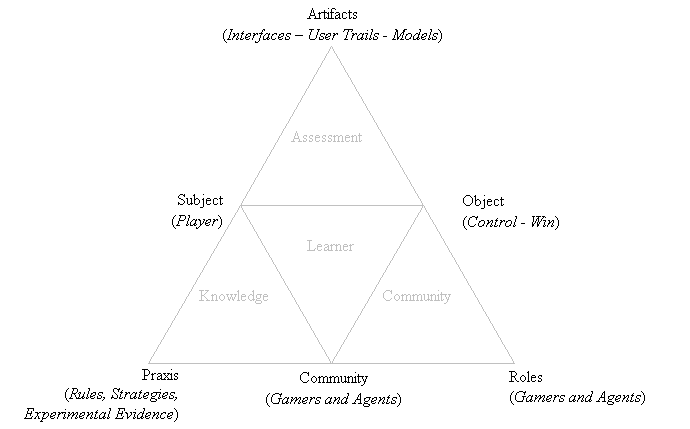
Figure 4. Activity Theory and (Simulation Elements) overlaid on the HPL framework
The framework for thinking about classroom community in a computational context has also been guided by sociocultural
activity theory (Leontyev 1977; Vygotsky
1978; Engeström, Miettinen et al. 1998)
as well as literature on situated agent behavior (Ortony, Clore et al.
1988; Gratch and Marsella 2004; Parunak, Bisson et al. 2006; Egges, Kshirsagar
et al. n.d.).
In the Engestrom enhancement of Activity Theory there are
six components: Artifact (Tool), Subject, Object, Rules, Community and Roles
(Division of labor) that are involved in the transformation of activity into an
outcome. Since games and simulations are human activity systems, there are
relationships of game elements to these six components as well as an aggregation into
the HPL framework
for how people learn (Figure 4). The framework synthesized from the three
different research traditions situates the community as part of a larger
evolutionary cultural historical system in which digital games and simulations
have arisen. It leads to a set of questions that can be raised when planning
new game-based learning experiences or analyzing the impact of a simulation on
learning (e.g. Who is the individual we are designing for? What tools will he
or she need? What objects will be worked on? Etc.) In this context, the
questions about community naturally include other people as players (in the
simulation now or who have ever played it), the cultural artifacts encountered
in the simulation space as well as software agents.
If the Activity-Games-HPL framework delineates the community structure, how will agents become aware of each other’s
psychological, physical and cognitive stances? Situated agent behavior researchers develop computational models to guide agent decision-making in relation to other agents,
players and non-playing characters (e.g. objects in the environment). A core
idea for social interaction of agents is the digital pheromone (Brueckner 2000), which is a labeled scalar
deposited in the environment that diffuses and evaporates. In the teaching
simulation for example, if a teacher groups certain students together, those
agents could be made more aware of each other’s observable variables and could
be impacted to perform better or worse depending on the group’s localized
social context within the larger community. The pheromone models can be
combined with a framework for emotional reasoning to mediate the rule-based
environmental monitoring and internal cognitive processes in an agent.
(Gratch and Marsella
2004)
have provided a domain-independent framework for modeling emotions based on a
general computational model of appraisal
and coping – two broad and
complementary mechanisms underpinning how “emotion motivates action, distorts
perception and inference, and communicates information about mental state” (p.
1). Appraisal monitors the relationship
between an agent’s internal state and incoming
variables representing the physical and social environment, and coping utilizes resources to adapt and
maintain the relationship. Appraisal, it is important to point out, is not a
higher order cognitive function like reasoning but rather “a reflexive assessment” (p. 5) of significance of an
event. Reflexive appraisal places it squarely in line with the behavior-based
distributed cognition models we explored in the section on the nature of
knowledge.
It may be possible to align the various appraisal criteria
for judging significance with the lowest level of sensorimotor reflexes
outlined by the subsumption hierarchical temporal architecture (Table 2). The
proposed alignment needs to be studied further and tested in real game systems.
Table 2. Appraisal criteria in proposed subsumption HT
architectural states
|
Appraisal Criteria
|
Key Question
|
Subsumption HT Architectural States
|
|
Relevance
|
Does the event require attention or adaptive reaction?
|
Near and above some threshold, there is persistent input
inconsistent with the current local world model
|
|
Desirability
|
Does the event facilitate or thwart what the person wants?
|
Signals inhibit output(s) when a higher order world model
controls the node or signals suppress input(s) when a lower order world model
detects relevance or causal attribution
|
|
Causal attribution Agency
|
What causal agent was responsible for an event?
|
Persistent sensorimotor association patterns are
established
|
|
Causal attribution Blame and Credit
|
Does the causal agent deserve blame or credit?
|
Spreading (broadcasting) expectations from active nodes
(see also Back propagation in neural nets and, Credit assignment in genetic
algorithms)
|
|
Likelihood
|
How likely was the event; how likely is an outcome?
|
High degree of hierarchical temporal alignment of input
with the current local world model
|
|
Unexpectedness
|
Was the event predicted from past knowledge?
|
Low degree of hierarchical temporal alignment of input
with the current local world model
|
|
Urgency
|
Will delaying a response make matters worse?
|
Far above some threshold, there is persistent input
inconsistent with the current local world model
|
|
Ego Involvement
|
To what extent does the event impact a person’s sense of
self (social esteem, moral values, cherished beliefs, etc.)
|
Degree of reorganization required to integrate the input
with the current local world model
|
|
Coping potential Controllability
|
The extent to which an event can be influenced.
|
Degree of hierarchical temporal alignment of input with
the current local world model
|
|
Coping potential Changeability
|
The extent to which an event will change of its own
accord.
|
Near and below some threshold of persistent input
inconsistent with the current local world model
|
|
Coping potential Power
|
The power of a particular agent to directly or indirectly control an event.
|
Degree of hierarchical temporal alignment of input with
the current local world model
|
|
Coping potential Adaptability
|
Can the person live with the consequences of the event?
|
Degree of reorganization required to integrate the input
with the current world model
|
If a low-level reflexive appraisal is possible, that is, one
that is at or near the boundary of the agent’s sensory system contacting
the world, the Gratch-Marsella model (or its Q-morphism) might evolve naturally as
part of the agent’s acting, roaming, discovering, and making sense of the
world. This approach would avoid the inevitable biases and inflexibility of
“designer preset emotions” that have been constructed for a particular
application. This is somewhat speculative, but evidence exists for an agent
learning to map new landmarks in its environment by assigning the new concepts
to unused high level nodes (Mataric and Brooks
1999)
thus constructing its own view of the community space. Ideally agents will learn about their community by acting
with and in it. Pfeifer and Bongard (Pfeifer and Bongard
2007)
have demonstrated that an agent can create a mental model of its own body image
and use that to learn and then adapt the image after injury to a limb to
re-learn how to move around in an environment. It seems to me to be a short
step to agents building mental models of other agents and users, with emergent
community resulting resting on fundamental interpersonal dynamics of social
interactions.
Using digital pheromones, a representation of community from the perspective of any single agent involves building an
internal model of other agents and users who share some element (e.g.
proximity, a situation, interests, values). The agents’ mental model will lead
to expectations of the others’ task performance and personality capabilities
and how those interact with the agent’s capabilities, in order to predict and
enact behavior. Characteristics normally associated with communities (norms of
behavior, cultural artifacts and other forms of collectivism) will then emerge.
Assessment is a broad topic and will only briefly be
outlined here in the context of feedback; not judgment “of learning”, but an
assistant “for learning.” In a typical learning environment, assessment for learning is critical to gauging and adapting how well one is
learning. Students need constant and timely feedback in order to learn new
skills. Even when studying alone, repetition and rehearsal of new ideas assists
memory and learning. This section concentrates then on dynamic assessment
methodologies including the emerging intelligence of software agents that
organize game or simulation feedback so that the user can get the most out of
the experience.
Successful digital games employ effective timely feedback
that help players gain expertise, know when they are gaining or losing ground,
attain goals and celebrate winning. The feedback concentrates on the authentic
and critical variables of the simulation play that track short and long-term
objectives and often simultaneously involves local and wide-angle views of the
playing field. This, in a nutshell is what good “assessment for learning” looks like. If teachers could learn these principles
and design similar assessments embedded in learning experiences, students would
stay on task, self-regulate and learn more. So, the simulation of teaching
should embody these principles in order to teach them to users.
To provide the needed feedback, digital games and
simulations have a great advantage over other forms of teaching in that a large
amount of data is created during every second of use – too much data, in fact.
Methods of data mining are needed to
create smaller sets of highly relevant
data for attributing meaningful
patterns of activity to the user.
Two broad methods of data-mining are top-down and bottom-up,
which evokes an image such as the hierarchical temporal cognitive framework discussed earlier as well as the age-old distinction of
deductive versus inductive methods. In top-down approaches the analysis queries
very large databases in order to test a hypothesis and in the bottom up
approach it interrogates a database in order to find persistent correlations
that can be used to generate new hypotheses. Some would say that persistent
relationships would have to be “rigorous statistical correlations” but let’s
also allow for fuzzy, incomplete, default hierarchies as discussed earlier.
Data mining methods include both unsupervised and supervised
machine learning approaches applied to very large-scale static and streaming data
sets. For game and simulation-situated feedback to the user during simulation
play, the best choice is supervised learning that is subsequently encoded to
enable real-time application to streaming data, otherwise the feedback might
get to the user long after it is needed to guide decisions. This choice
requires more pre-thought about relevance and attribution than the
alternatives, since unsupervised methods that involve genetic algorithms,
neural network analysis, and Bayesian algorithms can take many generations or
examples (i.e. a lot of time) to evolve solutions. Relevance and attribution
issues are discussed below.
Supervised machine learning methods involve training the
algorithm with examples or humans making decisions that help shape selections and
computational processes. Then by encoding those decisions into algorithms, the
“time to analysis results” can practically disappear. This allows rapid
feedback to the user but with a cost. An increase in inflexibility or stiffness
is an inevitable consequence of hard-wiring the human guided decisions into
code. In certain branches and kinds of declarative knowledge the stiffness is insignificant (e.g. learning which facts are true
or not or how to tighten a bolt in the right direction does not vary within the
problem space), but in tacit and complex knowledge domains it can be disastrous
(e.g. learning to diagnose cancer has many more ways to be right and wrong
within its problem space).
When the audience for the assessment is the user’s “after action review” or an educational researcher
or supervisor, then unsupervised learning methods on large static data sets may
be useful as post-hoc analyses. Ron Stevens (Stevens, Lopo and Wang
1996; Stevens 2006),
for example has shown that self-organizing artificial neural network analysis
can discover and model student problem-solving strategies. His post-hoc approaches
have also allowed his team to use Hidden Markov Modeling to develop predictive
learning trajectories across sequences of performances. These extremely
important and powerful findings cannot provide immediate feedback to a user
unless they are used to pre-structure algorithms for the analysis of streaming
data.
This implies that a cycle of learning in the research and
development community can lead to better streaming feedback in games and
simulations. In the early stages, approximate and intuitive use of streaming
data to provide “heads-up” feedback to users can later become more finely tuned
by post-hoc analyses’ inductive biases built into the feedback systems.
A precondition of data mining is having data to work with
and if there is have too much data generated by the simulation or simulation
engine and user interactions, what should be collected? Here, the choice to go
with supervised machine learning seems obvious, because the humans interested
in the results already know what they are interested in tracking, analyzing and
reporting on. They have the criteria of relevance and attribution in mind.
Assessment according to Mislevy (Mislevy, Steinberg et
al. 2003)
is a “machine for reasoning about what students know, can do, or have
accomplished, based on a handful of things they say, do, or make in particular
setting (p. 1).” It’s that handful I turn to now, keeping in mind the digital
environment of games and simulations. The basic framework for data relevance in
assessment rests on
some kind of inference model that relates artifacts of the user to attributions
of their meaning (e.g. are these artifacts of sufficient quality, do they
indicate that the user has acquired new knowledge since the start of the game,
are they indicators of prior knowledge, are they consistent with scientific
knowledge, etc.).
The user however, needs a different set of data to guide
in-flight decisions, and the question for designers is what to do with both
streams of data – that needed by players and that needed by assessment
decision-makers. The data relevant to the user might have to do with navigating
the problem space, making headway on the goal, avoiding traps, misconceptions
and penalties, and knowing when useful information has been found that needs to
be incorporated into an evolving solution. As the user interacts with the game
or simulation to discover and utilize these markers of progress, the
educational researcher wants access to the trail of user moves, resource
utilization, timing and sequencing and artifact production methods and quality
to make substantive inferences or attributions concerning user learning. Both
sets of data help refine what is relevant to whom and is needed at what time;
and these refinements delineate which mix of methods is best to employ.
A recent special edition of the Journal of Interactive
Learning Research (Choquet, Luengo and
Yacef 2007)
focused on usage analysis in learning systems and provides several examples of
user tracking as the concrete implementation of data collection from the myriad
possibilities streaming from a game or simulation. Designers might utilize a
specific modeling language such as the EML proposed by the IMS Global Learning
Consortium (IMS 2006) which then implicitly defines
observations needed to match the learning design intentions. Or, in
unstructured designs, the conceptual assessment framework (CAF) delineated by
Mislevy and colleagues (Almond, Steinberg et
al. 2002; Mislevy, Steinberg et al. 2003) can help guide decisions for
a principled structure of attribution.
The three components of the Conceptual Assessment Framework
(CAF) are the student model, task model and evidence model (Figure 5).
In computational terms each model is a register of data that
is updated at different time scales. The student model “specifies the variables
in terms of which we wish to characterize students” (p.6). We might think of
the student model as the “perfect score” as well as “all the right actions” needed
in the performance of the task. As a user plays a game, a performance instance
is recorded by the task model and evaluated by the evidence model. The
timeframe of updating the student model tends to be between simulation
instances, since any change during a simulation would invalidate or destabilize
the measure of metric distance between the user performance and the idealized
student performance characteristics.
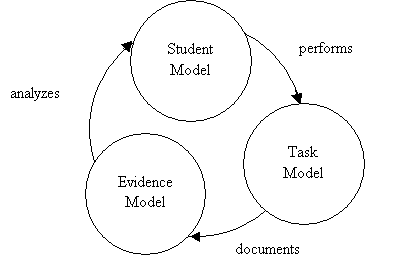
Figure 5.
Three components of the conceptual
assessment framework
The task
model defines the structure of the problem space, prompt and schemas that
“test” the user through the challenges of the game or simulation. The task
model also specifies work products and other ways to collect data on the user –
the “user trail” and “artifacts” for example. It is according to (Mislevy, Steinberg et
al. 2003)
“a design object that bridges substantive considerations about the features of
tasks that are necessary to elicit evidence about targeted aspects of
proficiency, on the one hand, and on the other, the operational activities of
authoring, calibrating, presenting, and coordinating particular assessment
tasks” (p. 27). In a multi-task problem space (e.g. a test with many items or a
complex chain of tasks required in decision-making, a complex game) assembly
and presentation modules select new tasks and package them for the user
experience.
Each leverage point of the task model interface (e.g. what
the user can do with this digital application) represents a potential channel
of information for the evidence model. The evidence model has two roles. It
extracts salient features of the user’s performance and measures the extent to
which user inputs and artifacts lead to claims about the user’s learning and
knowledge. It computes a relationship between the trails-artifacts and the task
model. It can be updated on two time scales – immediately for user feedback
during simulation play, and post-hoc for more complex educational assessments.
Mislevy and colleagues point out that the alignment of the
three models takes place through “domain modeling” in which a theory of the relationships
between the three models are conceived of as a whole and integrated into an
evidence-based model for attribution or claims about a particular user’s
performance in relationship to a specific task.
The COVE framework summary:
- Agents possess
cognitive, psychological, and physical abilities and preferences and these
characteristics shape the way they learn
- COVE = three internal
layers of processing, and the external environment
- Cognitive layer is
divided into general and specific processes
- Psychometric models
and practical assessment models define six general cognitive variables
- Each cognitive variable utilizes either a bipolar
continuum or an off-on state followed by a qualitative continuum.
- O layer contains the
OCEAN psychological
variables, processing
variables, short-term
memory and fluid
reasoning.
- V layer contains
Vision, Audition and Kinesthetics as representative physiological variables
- Environment variables
contain tasks (objects),
interpersonal relationships and social expectations states theory (agents) and the
effects of sequences of interactions (events)
In summary, the COVE model utilizes the CHC theory of
intelligence to define six “C - cognitive variables,” five “O –
motivational/emotion/processing variables” and five “V - physiological
variables.” It arranges the factors into a hierarchical model, with receptors
at the boundary between the agent and the environment and three broad layers
leading to the acquisition and long-term storage and retrieval of both general
and specific knowledge. The linkages among the factors are guided by two
considerations: strengths of linkages based on intercorrelation data from
psychometric measures and structural-functional precedence based on
evolutionary and developmental computational models.
Figure x. COVE model of cognition integrating the CHC theory
of intelligence
References
Acton, S. (n.d.).
"Interpersonal complementarity."
Retrieved May 7, 2007, from http://www.personalityresearch.org/interpersonal/comp.html.
Albert, R. and B.
Albert-Laszio (2002). "Statisical mechanics of complex networks." Reviews
of Modern Physics 74(January):
47-97.
Aldrich, C.
(2005). Learning by doing : the essential guide to simulations, computer
games, and pedagogy in e-learning and other educational experiences. San
Francisco, CA, Jossey-Bass.
Almond, R., L.
Steinberg, et al. (2002). "Enhancing the design and delivery of assessment
systems: A four process architecture." The Journal of Technology,
Learning, and Assessment 1(5).
Bar-Yam, Y.
(1997). Dynamics of complex systems. Reading, MA, Addison-Wesley.
Bartneck, C.
(n.d.) "Integrating the OCC Model of emotions in embodied
characters." Volume, DOI:
Baum, E. (2004). What
is thought? Cambridge, MA, MIT Press.
Beck, J. and M.
Wade (2004). Got game: How the gamer generation is reshaping business
forever. Boston, MA, Harvard Business School Press.
Becker, K.
(2006). Pedagogy in commercial video games. Games and simulations in online
learning: Research & development frameworks. D. Gibson, C. Aldrich and
M. Prensky. Hershey, PA, Idea Group.
Beinhocker, E.
(2006). The origin of wealth: Evolution, complexity and the radical remaking
of economics. Boston, MA, Harvard Business School Press.
Berger, J., E.
Cohen, et al. (1966). Status characteristics and expectation states. Sociological
theories in progress. J. Berger and M. Zelditch, Jr. Boston,
Houghton-Mifflin. 1: 29-46.
Bloom, B., B.
Mesia, et al. (1964). Taxonomy of educational objectives. New York,
David McKay.
Braitenberg, V.
(1984). Vehicles, experiments in synthetic psychology. Cambridge, MA,
MIT Press.
Bransford, J., A.
Brown, et al., Eds. (2000). How people learn: Brain, mind, experience and
school. Washington: DC, National Academy Press.
Bratman, M.
(1987). Intention, plans, and practical reason. Chicago, IL, University
of Chicago Press.
Brooks, R.
(1986). "A robust layered control system for a mobile robot." Journal
of Robotics and Automation 2(April):
14-23.
Brooks, R.
(1999). Cambrian intelligence: The early history of the new AI.
Cambridge, MA, MIT Press.
Brueckner, S.
(2000). Return from the ant: Synthetic ecosystems for manufacturing control. Department
of Computer Science. Berlin, Humboldt University.
Bruner, J.
(1960). The process of education. Cambridge, MA, Harvard University
Press.
Bruner, J., R.
Oliver, et al. (1966). Studies in cognitive growth. New York, Wiley.
Budaev, S.
(2000). The dimensions of personality in humans and other animals: A
comparative and
evolutionary
perspective. Moscow.
Busetta, P., J.
Bailey, et al. (2002). "A reliable computational model for BDI
agents." 2007, from http://sra.itc.it/people/busetta/papers/safeAgents03.pdf.
Carroll, J. B.
(1993). Human cognitive abilities: A survey of factor analytic studies.
New York, Cambridge University Press.
Carroll, J. B.
(1996). The three-stratrum theory of cognitive abilities. Contemporary
intellecual assessment: Theories, tests, and issues D. Flanagan,
J. Genshaft and P. Harrison. New York, Guilford Press: 122-130.
Carson, R. C.
(1969). Interaction concepts of personality. Chicago, Aldine.
Casali, A., L.
Godo, et al. (2004). Graded BDI models for agent architectures. 5th
International Workshop on Computational Logic for Multi-Agent Systems, CLIMA V,
Lisbon, Portugal, Springer.
Cattell, R.
(1957). Personality and motivation: Structure and measurement. New York,
Harcourt, Brace & World.
Chamorro-Premuzic,
T. and A. Furnham (2004). "A possible model for understanding the
personality-intelligence interface." British Journal of Psychology 95: 249-264.
Choquet, C., V.
Luengo, et al. (2007). "Special issue: Usage analysis in learning
systems." Journal of Interactive Learning Research 18(2): 159-160.
Cohen, E. and R.
Lotan (1997). Working for equity in heterogeneous classrooms: Sociological
theory in practice. New York, Teacher College Press.
Cosmides, L. and
J. Tooby. (2007). "Evolutionary psychology: A primer." from http://www.psych.ucsb.edu/research/cep/primer.html.
Costa, A. (1999).
Adapted from opening remarks from a session at National Staff Development
Conference. December, 1999.
Daniel, M. H.
(1997). "Intelligence testing: Status and trends." American
Psychologist 52(10): 1038-1045.
Dennett, D.
(1995). Darwin's dangerous idea: Evolution and the menaings of life. New
York, Simon & Schuster.
Dick, W. and L.
Carey (1996). The systematic design of instruction. New York, Haper
Collins College Publishers.
Digman, J.
(1990). "Personality structure: Emergence of the five-factor model." Annual
Review of Psychology 41:
417-440.
Edelman, G. and
V. Mountcastle (1978). The mindful brain: Cortical organization and the
group selective theory of higher brain function. Cambridge, MIT Press.
Edelman, G. and
G. Tononi (1995). Neural darwinism: The brain as a selectional system. Nature's
imagination: The frontiers of scientific vision. J. C. J. New York, Oxford
University Press: 148 - 160.
Egges, A., S.
Kshirsagar, et al. (n.d.). "A model for personality and emotion
simulation." Retrieved May 5,
2007, from http://www.miralab.unige.ch/papers/162.pdf.
Engeström, Y., R.
Miettinen, et al., Eds. (1998). Perspectives on activity theory. Cambridge,
MA, Cambridge University Press.
Ewen, R. (1998). Personality:
A topical approach. Mahweh, NJ, Erlbaum.
Eysenck, H. and
M. Eysenck (1985). Personality and individual differences. New York,
Plenum.
Galarneau, L. and
M. Zibit (2006). Multiplayer online games as practice arenas for 21st century
competencies. Games and Simulations in Online Learning: Research and
Development Frameworks. D. Gibson, C. Aldrich and M. Prensky. Hershey, PA,
Idea Group Publishers.
Gardner, H.
(1983). Frames of mind : the theory of multiple intelligences. New York,
Basic Books.
Gee, J. (2004). What
Video Games Have to Teach Us About Learning and Literacy. New York,
Palgrave Macmillan.
Gibson, D.
(2006). Games and simulations in online learning. Hershey, PA, Idea
Group, Inc.
Gratch, J. and S.
Marsella (2004). "A domain-independent framework for modeling
emotion." Journal of Cognitive Systems Research 5(4): 269-306.
Haraway, D.
(1988). "Situated Knowledges: The Science Question in Feminism and the
Privilege of Partial Perspective." Feminist Studies 14(3): 575-599.
Hawkins, J. and
S. Blakeslee (2004). On intelligence. New York, Henry Holt and Company.
Heinich, R., M.
Molenda, et al. (1993). Instructional media and the new technologies of
instruction. NY, Macmillan.
Hofstee, W., B.
de Raad, et al. (1992). "Integration of the Big Five and Circumplex
approaches to trait structure." Journal of Personality and Social
Psychology 63(1): 146-163.
Holland, J.
(1995). Hidden order: How adaptation builds complexity. Cambridge, MA,
Perseus Books.
Holland, J.
(1998). Emergence: From chaos to order.
Holland, J., K.
Holyoak, et al. (1986). Induction: Processes of inference, learning, and
discovery. Cambridge, MA, MIT Press.
Holland, J. and
J. Reitman (1978). Cognitive systems based on adaptive algorithms. Pattern-directed
inference systems. D. Waterman and F. Hayes-Roth. New York, Academic Press.
Horn, J. and J.
Noll (1997). Human cognitive capabilities: Gf-Gc theory. Contemporary
intellectual assessment: Theories, tests and issues. D. Flanagan, J. Genshaft
and P. Harrison. New York, Guilford: 53-91.
Howard, P. J. and
J. M. Howard (2000). The owner's manual for personality at work : how the
big five personality traits affect performance, communication, teamwork,
leadership, and sales. Atlanta, GA, Bard Press.
IMS. (2006). Retrieved May 7, 2007, from http://www.imsglobal.org.
Jones, J. and S.
Bronack (2006). Rethinking cognition, representations, and processes in 3D
online social learning environments. Games and simulations in online
learning: Research & development frameworks. D. Gibson, C. Aldrich and
M. Prensky. Hershey, PA, Idea Group.
Kalkhoff, W. and
S. Thye (2006). "Expectation states theory and research: New observations
from meta-analysis." Sociological Methods & Research 35(2): 219-249.
Kauffman, S.
(2000). Investigations. New York, Oxford University Press.
Keller, J.
(1983). Motivational design of instruction. Instructional-design theories
and models: An overview of their current status. C. M. Reigeluth.
Hillsdale, NJ, Lawrence Erlbaum Associates.
Kiesler, D.
(1983). "The 1982 interpersonal circle: A taxonomy for complementarity in
human transactions." Psychological Review 90: 185-214.
LaBar, K. and E.
Phelps (1998). "Arousal-mediated memory consolidation: Role of the medial
temporal lobe in humans." Psychological Science 9: 490-493.
Leary, T. (1957).
Interpersonal diagnosis of personality. New York, Ronald.
Lemire, D.
(2002). "Brief report: What developmental educators should know about
learning styles and cognitive styles." Journal of College Reading and
Learning 32(2): 177-182.
Leontyev, A.
(1977). "Activity and Consciousness." Philosophy in the USSR,
Problems of Dialectical Materialism, from http://www.marxists.org/archive/leontev/works/1977/leon1977.htm.
Mataric, M. and
R. Brooks (1999). Learning a distributed map representation based on navigation
behaviors. Cambrian Intelligence. R. Brooks. Cambridge, MA, MIT Press: 37-58.
McGrew, K.
(2003). "Cattell-Horn-Carroll CHC (Gf-Gc) Theory: Past, Present &
Future." Retrieved May 8, 2007,
from http://www.iapsych.com/CHCPP/CHCPP.HTML.
McGrew, K. and R.
Woodcock (2001). Technical manual. Itasca, IL, Riverside Publishing.
Mislevy, R. J.,
L. S. Steinberg, et al. (2003). "On the structure of educational
assessments." Measurement: Interdisciplinary Research and Perspectives
1: 3-67.
Morris, T. (2002)
"Conversational agents for game-like virtual environments." Volume, DOI:
Ortony, A., G.
Clore, et al. (1988). The cognitive structure of emotions. Cambridge,
UK, Cambridge University Press.
Parunak, H., R.
Bisson, et al. (2006). A model of emotions for situated agents.
Autonomous Agents and Multi-Agent Systems, Hakodate, Hokkaido, Japan.
Parunak, H., R.
Bisson, et al. (2006). Representing dispositions and emotions in simulated
combat. Defense applications of multi-agent systems, Springer Berlin /
Heidelberg. 3890/2006: 51-65.
Pfeifer, R. and
J. Bongard (2007). How the body shapers the way we think: A new view of
intelligence. Cambridge, MA, MIT Press.
Piaget, J.
(1973). The child and reality: Problems of genetic psychology. New York,
Grossman.
Piaget, J.
(1985). The equilibration of cognitive structures: The central problem of
intellectual development.
Pink, D. (2005). A
whole new mind: Moving from the Information Age to the Conceptual Age. New
York, Riverhead Books.
Platek, S., J.
Keenan, et al., Eds. (2006). Evolutionary cognitive neuroscience.
Cambridge, MA, MIT Press.
Plutchik, R. and
H. R. Conte (1997). Circumplex models of personality and emotions.
Washington, DC, American Psychological Association.
Popper, K.
(1959). The logic of scientific discovery. London, Routledge.
Prensky, M.
(2002). What kids learn that's positive from playing video games. 2005.
Prigogine, I.
(1996). The end of certainty: Time, chaos, and the new laws of nature.
Putnam, H.
(1992). Renewing philosophy.
Rao, A. and M.
Georgeff (1991). Modeling rational agents within a BDI architecture.
International Conference on Principles of Knowledge Representation and
Reasoning, Morgan Kaufman.
Sattler, J.
(2001). Assessment of children: Cognitive applications. San Diego,
Jerome M. Sattler, Publisher, Inc.
Shaffer, D. (2007).
"Epistemic games." Innovate.
Silver, H. F., R.
W. Strong, et al. (2000). So each may learn: Integrating learning styles and
multiple intelligences. Alexandria, VA, Association for Supervision and
Curriculum Development. .
Silverman, B.
(2001). More realistic human behavior models for agents in virtual worlds:
Emotion, stress, and value ontologies. ACASA Technical Report.
Philadelphia, PA, University of Pennsylvania.
Simon, H. (1955).
"A behavioral model of rational choice." Quarterly Journal of
Economics 69: 99-118.
Snow, R. E.
(1998). Abilities and aptitudes and achievements in learning situations. Human
Cognitive Abilities in Theory and Practice. J. J. McArdle and R. W.
Woodcock. Mahwaw, NJ, Lawrence Erlbaum: 93-112.
Squire, K.
(2005). " Changing the game: What happens when videogames enter the
classroom?" Innovate 1(6).
Sternberg, R. J.
and J. C. Kaufman (1998). "Human abilities." Annual Review of
Psychology 49: 1134-1139.
Stevens, R.
(2006). Machine learning assessment systems for modeling patterns of student
learning. Games and simulations in online learning: Research &
development frameworks. D. Gibson, C. Aldrich and M. Prensky. Hershey, PA,
Idea Group.
Stevens, R., A.
Lopo, et al. (1996). "Artificial neural networks can distinguish novice
and expert strategies during complex problem solving." Journal of the
American Medical Informatics Association 3: 131-138.
Su, W., P. Binh,
et al. (2007). "Personality and emotion-based high-level control of
affective story characters." IEEE Transactions on visualization and
computer graphics 13(2).
Su, W., B. Pham,
et al. (2006). Generating believable personality-rich story characters using
body languages. AMT06, The Fourth International Conference on Active Media
Technology, Brisbane, IOS Press.
Van Eck, R. (2006).
Building artificially intelligent learning games. Games and simulations in
online learning: Research & development frameworks. D. Gibson, C.
Aldrich and M. Prensky. Hershey, PA, Idea Group.
Vygotsky, L. S.
(1962). Thought and Language. Cambridge, MA, MIT Press.
Vygotsky, L. S.
(1978). Mind in society: The development of higher psychological processes.
Weiler, K.
(1991). "Freire and a feminist pedagogy of difference." Harvard
educational review 61:4 (November) 449-474.
List of Key Terms with Definitions
Computational models.
Abstract representations for investigating computing machines. Standard
computational models assume a discrete time paradigm. A mathematical object
representing a question, which computers might be able to solve.
Game, Simulation. A
computer code or application that embodies the rules, boundaries and
relationships of some system.
Agent, Intelligent
Agent, Software Agent. A computational representation of embodied thought
and action utilizing artificial intelligence. A piece of software that acts for
a user or other program with the authority to decide when (and if) action is
appropriate.
HPL Framework. A
review of research on “how people learn” produced for the Commission on
Behavioral and Social Sciences and Education of the National Research Council,
edited by John Bransford, Ann Brown and Rodney Cocking. The framework has four
broad themes, which organize the cognitive science literature: knowledge,
learner, community, and assessment.
Darwinian creatures.
A concept of evolutionary agency by Daniel Dennett in which creatures evolve by
simple mutation, recombination, and selection made by fitness on a landscape
that serves as the evaluation function.
Pavolvian creatures.
A concept of evolutionary agency by Daniel Dennett in which creatures have a
nervous system and stimulus-response learning is possible.
Popperian creatures.
A concept of evolutionary agency by Daniel Dennett in which creatures have
internal models and can simulate or run the models disengaged from the world.
Gregorian creatures. A
concept of evolutionary agency by Daniel Dennett in which creatures use tools
to create a shared base of knowledge or culture.
Braitenberg vehicles.
A conceptual system of evolutionary agents developed by Victor Braitenberg
characterized by neural and motor connections that give rise to locomotion and
higher forms of activity in the world.
Activity Theory.
A sociocultural historical analytic framework founded on the ideas of Leontyev,
Engeström and others. The framework has six elements: Subject, Object,
Artifact, Praxis, Community and Roles.
Brief Biographical Sketch
Dr. Gibson is Research Assistant Professor in the College of
Engineering and Mathematical Sciences, University of Vermont and Executive
Director of The Global Challenge (www.globalchallengeaward.org),
a team and project-based learning and scholarship program for high school
students funded by the National Science Foundation that engages small teams in
studying science, technology, engineering and mathematics in order to solve
global problems. His research and publications include work on complex systems
analysis and modeling of education, Semantic Web applications and the future of
learning, and the use of technology to personalize education for the success of
all students. His book “Games and Simulations in Online Learning” published by
IGI, outlines the potential for games and simulation-based learning. He is
creator of simSchool (www.simschool.org),
a classroom flight simulator for training teachers, currently funded by the US
Department of Education FIPSE program. He is currently involved in translating
simSchool and articles into Korean, Chinese and Japanese. He is founder of,
CURVESHIFT, is an educational
technology company (www.curveshift.com)
that assists in the acquisition, implementation and continuing design of games
and simulations, e-portfolio systems, data-driven decision making tools, and
emerging technologies.